Last updated November 22, 2026
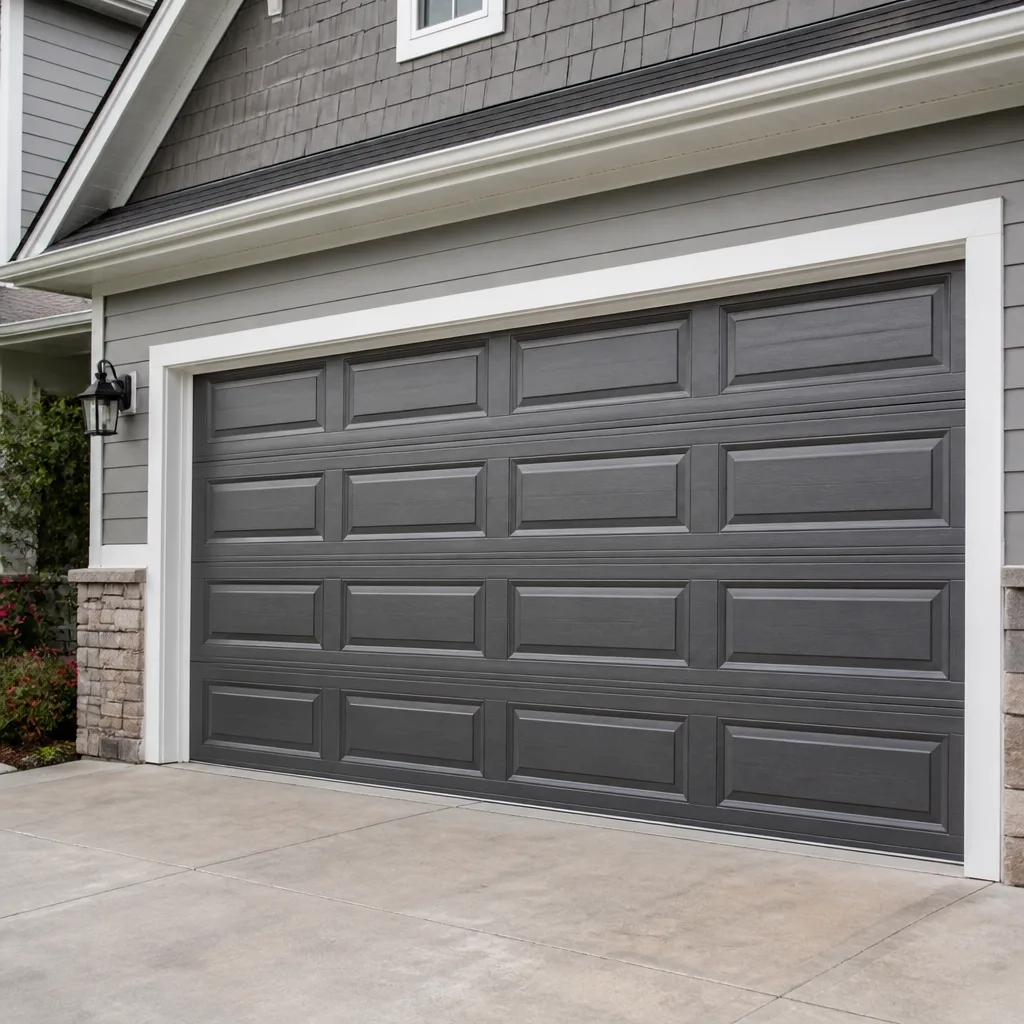 Raised-panel steel
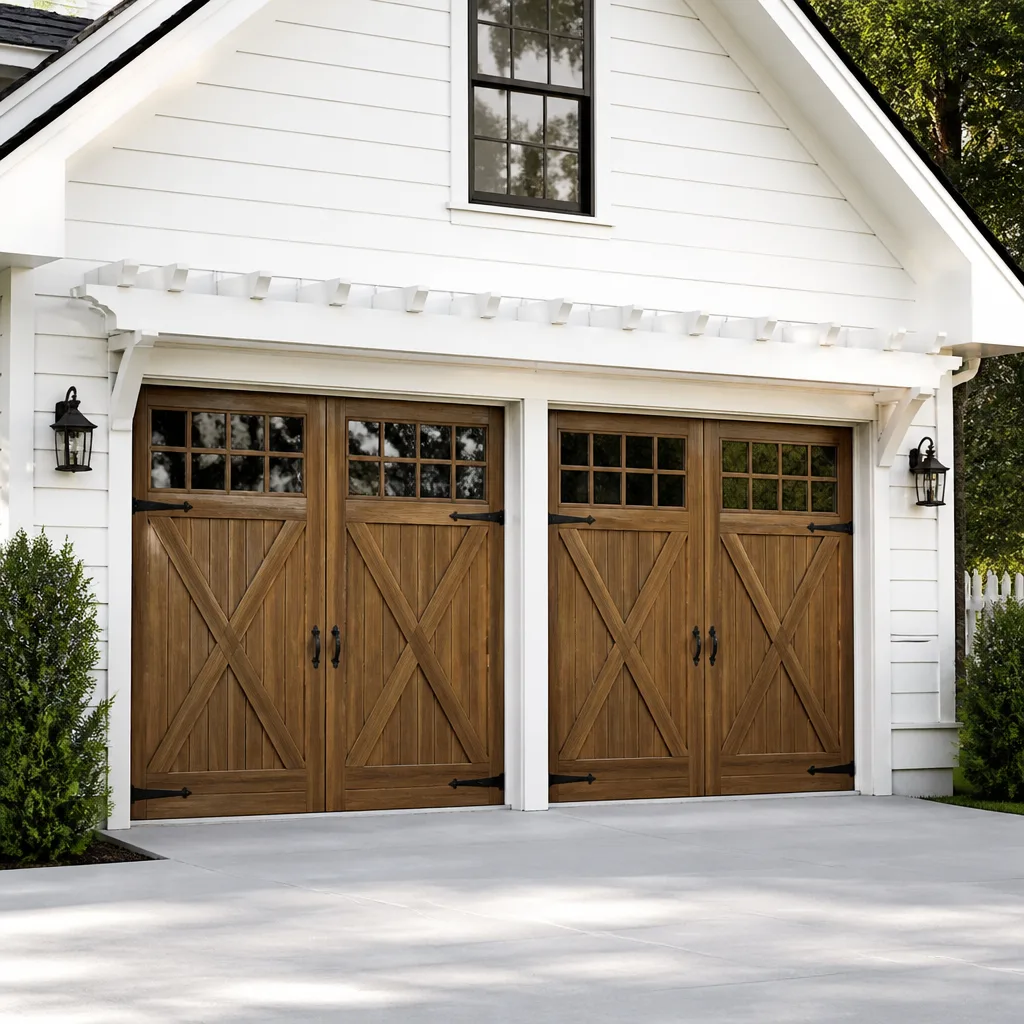 Carriage house
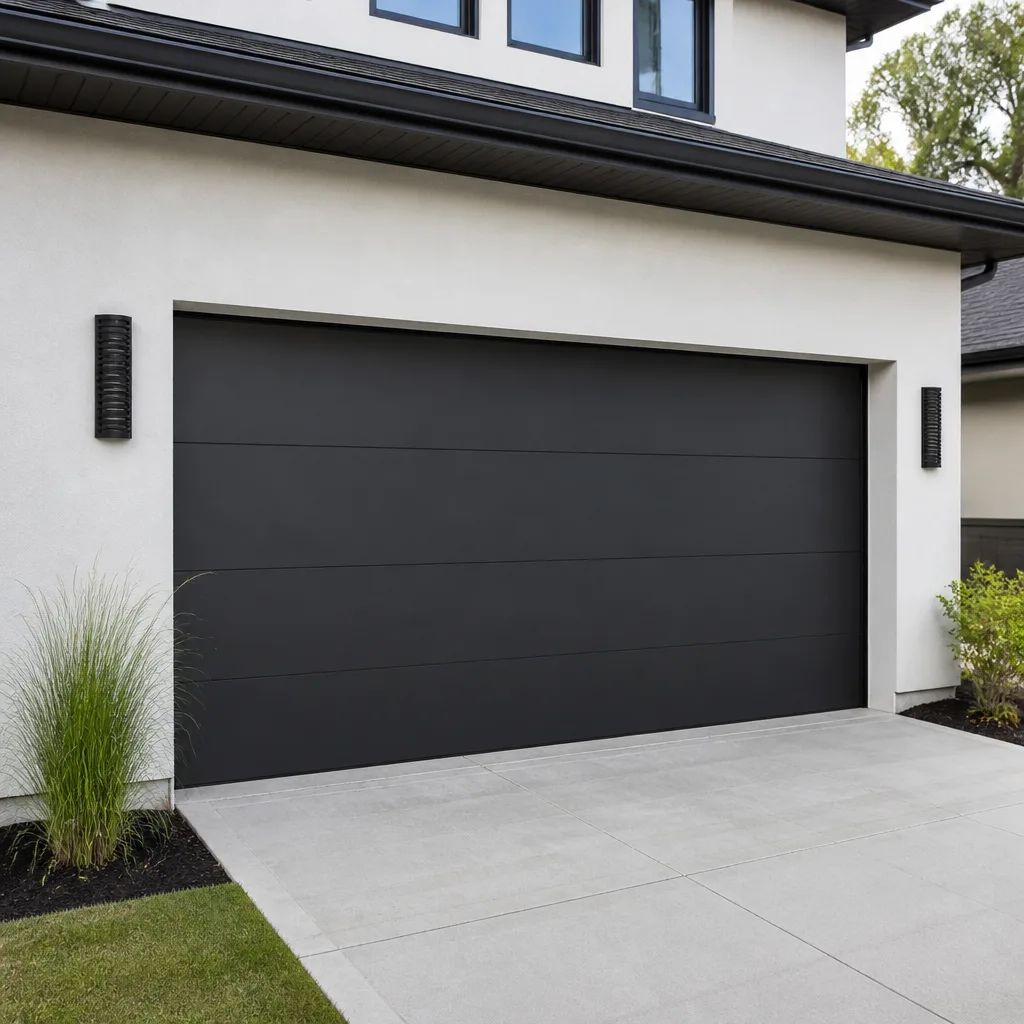 Modern flush
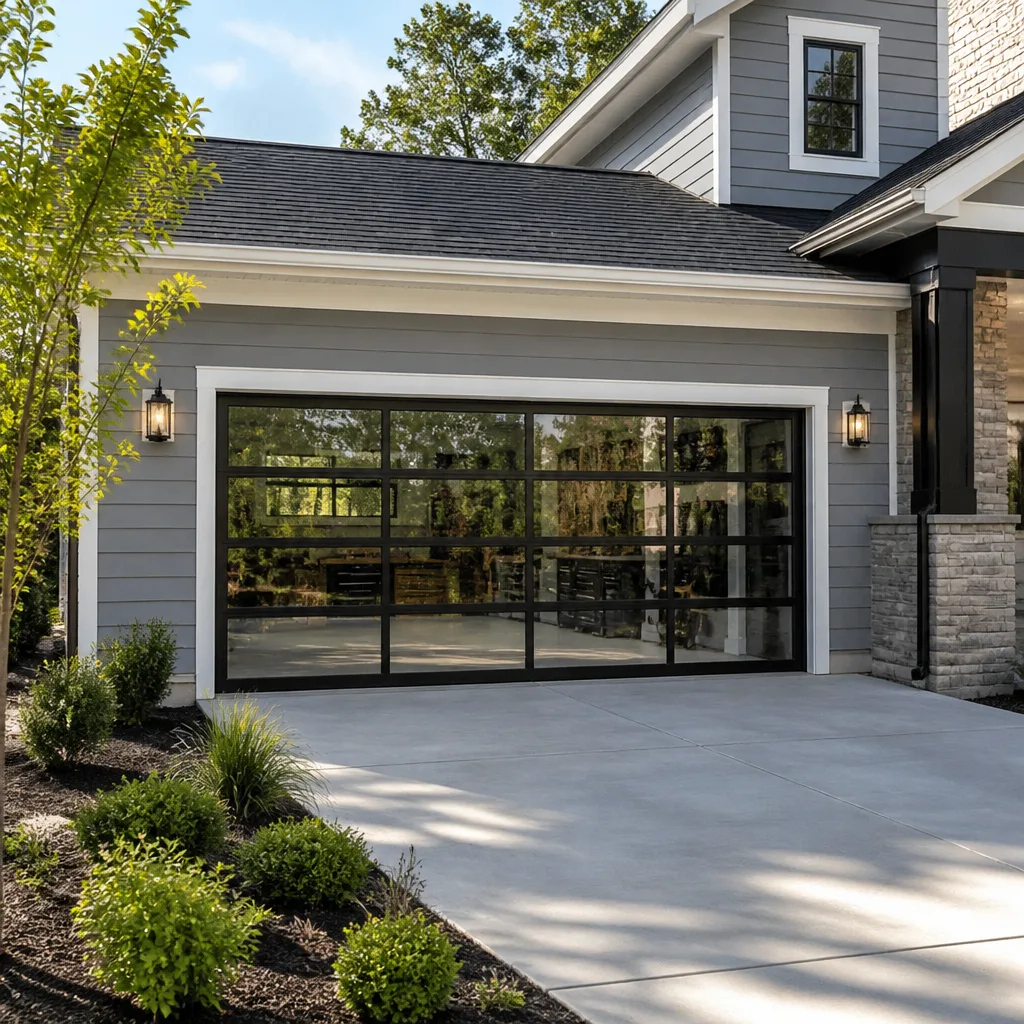 Full-view glass
 LiftMaster openers
 Chamberlain openers
Full 25-point door and opener safety check with every visit - springs, cables, rollers, tracks, and your LiftMaster or Chamberlain opener included
You get a price before we start. It does not change when the pro arrives.
Get your free estimateDIY vs Professional Garage Door: The Alexandria Homeowner’s Decision Guide
A torsion spring on a standard residential door can hold well over 100 foot-pounds of torque when it’s wound. The reason trained technicians use steel winding bars and not a drill or a pair of screwdrivers isn’t caution for its own sake – it’s physics. When that stored energy lets go, it releases in a fraction of a second with enough force to break bones. This guide draws a hard line: which garage door jobs in Alexandria are genuinely fine to do yourself, which ones carry injury risk serious enough that no dollar savings justify them, and where Virginia insurance, HOA rules, and city permitting change the math. We’ll walk through the mechanics of each decision so you can judge your own situation instead of guessing.
Quick Answer
Most garage door maintenance – lubricating rollers, wiping down panels, testing the safety reverse, tightening track bolts – is safe and sensible to do yourself. Everything that involves the torsion spring, the cables, or the bottom bracket under spring tension is not a DIY job, because a single slip can cause serious injury. Installation and opener rewiring sit in the middle: legally complicated in Alexandria because of permits and HOA approval, and best left to a specialist who can warranty the work.
Styles & brands we work with
- Raised-panel steel
- Carriage house
- Modern flush
- Full-view glass
- LiftMaster openers
- Chamberlain openers
Table of Contents
- The Safe vs. Unsafe Task Matrix
- The Right Tools (and Why Improvised Ones Cause Injuries)
- DIY Maintenance vs. Professional Service: The Alexandria Cost Picture
- HOA Rules and Alexandria Permits for Installation Work
- The Liability Gap: What Virginia Homeowner’s Insurance Covers
- Why Springs and Cables Are Their Own Category
- When the Decision Makes Itself
- Frequently Asked Questions
The Safe vs. Unsafe Task Matrix
The DIY vs professional garage door question has a more precise answer than most guides give. It isn’t one decision – it’s a task-by-task line, and the line falls exactly where stored mechanical energy begins. Here’s where each job sits and the mechanical reason for the classification.
Safe for a capable homeowner
- Lubricating rollers, hinges, and the torsion bar bearings – low-tension moving parts with no stored load. A few minutes with the right lubricant quiets a noisy door and slows wear.
- Testing the safety reverse – a routine check that the door reverses when it meets an obstruction. No tools, no risk, and it’s the single most important safety habit you can keep.
- Replacing a remote battery or re-pairing a remote – electronics handling, not mechanical tension.
- Cleaning and lightly waxing steel or aluminum panels – cosmetic upkeep with the door fully closed.
- Tightening visible track bolts and hinge screws – a socket wrench on fasteners while the door is down and at rest.
- Clearing debris from the photo-eye lenses – a soft cloth on the two sensors at the base of the tracks.
Not safe – stop and call a professional
- Torsion spring replacement or adjustment – the spring is the energy storage for the whole system. This is a job for a specialist, full stop.
- Extension spring replacement – same principle, less torque, still capable of severe injury if it releases.
- Cable replacement or re-seating – cables are under tension any time the spring is wound. A released cable whips with the full spring load behind it.
- Bottom bracket work – the bottom bracket is where the cable anchors, so it’s a tension component, not a structural one.
- Track realignment after impact – a bent track holds the door under load; forcing it back can drop the door.
- Panel replacement under a wound spring – the door must be fully de-tensioned first, which is itself a spring procedure.
Homeowners in Alexandria who call us after a failed DIY spring attempt almost always describe the same thing – they were sure they had it, the spring was “just” a spring, and the tool slipped. The mechanical reason is simple: a torsion spring holds force you cannot see once it’s wound, and it doesn’t warn you before it releases. Spring failure is a job for a specialist, not because it’s hard to understand, but because the risk is real whether or not you understand it.
The Right Tools (and Why Improvised Ones Cause Injuries)
Almost every DIY garage door injury traces back to one root cause: an improvised tool. Not a lack of skill, not bad luck. Screwdrivers used as winding bars, vice grips on a cable, a drill on a spring winder. The mechanism is predictable – improvised tools don’t fit the winder or the cable the way they need to, and when they slip, the stored energy goes somewhere. Often into a hand.
What the safe maintenance tasks actually require
- White lithium or silicone-based garage door lubricant – not WD-40, which attracts grit. A spray can with a straw nozzle reaches the roller stems and hinge pins.
- A socket wrench set – for the track bolts and hinge screws. The sizing matters; a crescent wrench rounds the heads and makes the next maintenance harder.
- A step ladder rated for your weight – most of the safe tasks still happen above head height, and a chair or bucket is where falls begin.
- Safety glasses – a cheap pair protects against the debris and dust that shaking a door row loosens.
- A soft cloth and mild detergent – for panels. Abrasive pads scratch through the factory finish.
- A torque screwdriver for opener terminals – only relevant if you’re re-pairing a wall console, which is normally a push-button job.
Notice what’s missing: winding bars. Those are a professional tool, used in pairs, sized to the spring, and never substituted. A set of winding bars costs less than a single medical copay, but they’re useless without the training to know how far to wind and how to lock the door down before you start. That’s the same reason we don’t publish a step-by-step “how to wind your own spring” guide – the how-to isn’t the hard part. Judging whether the spring is at the right tension, whether the door is properly de-tensioned, and whether the cable is seated while you work is the part that requires training and the physical strength to control a loaded spring if something shifts. We’d rather explain how the system works and let you decide whether to touch the loaded part.
For repairable issues – a grinding roller, a misaligned sensor, a door that reverses halfway down – professional garage door repair handles the diagnosis faster than trial-and-error does. Our technicians have up to 14 years of experience with these systems, and the diagnostic step is often where the savings actually live: they find the real cause instead of replacing parts until the noise stops.
DIY Maintenance vs. Professional Service: The Alexandria Cost Picture
In Alexandria’s housing market, where many homes have a single-car or two-car attached garage feeding straight into the kitchen or a bedroom, a door that fails is a security problem the same day. That urgency is exactly why cost comparisons get skewed: people compare “the Saturday I lose” against “the bill I pay,” but they rarely factor in the cost of doing the job twice.
Here’s the honest comparison, with all figures as typical estimates and not quotes – a written estimate from a local professional sets the final price:
| Task | Typical DIY cost | Typical professional cost (Alexandria) | Verdict |
|---|---|---|---|
| Lubrication and tune-up | Under $15 for lubricant | Roughly $75 – $150 for routine service | DIY makes sense |
| Safety reverse test | Free | Included in service visits | DIY, every month |
| Remote battery or re-pair | $5 – $10 | $50 – $100 if you call it in | DIY |
| Panel or track repair | No safe DIY path | $150 – $400 depending on parts | Professional |
| Spring replacement (one spring) | No safe DIY path | Roughly $180 – $340; a matched pair costs about twice that | Professional, always |
| Opener repair or replacement | Diagnosis risk | $120 – $450 typical | Professional under most brands |
The right column of that table is the crux of the cost argument. A homeowner who lubricates twice a year, tests the reverse monthly, and re-pairs the remote on their own saves the small money and keeps the system healthy. That routine maintenance is what delays the $300 spring job and the $150 sensor call. Professional “annual service” contracts, when you find them in the Alexandria market, mostly bundle the very tasks you can do yourself – so the practical advice is to skip the contract and build the habit. Save the phone call for the jobs on the right side of the line.
On the small stuff, a quick call can also save a service charge. If you’re not sure whether a symptom is a sensor, an opener board, or a loose connection, professional garage door opener repair is usually cheaper than the process of swapping parts to find out – and it comes with a warranty on the repair.
HOA Rules and Alexandria Permits for Installation Work
This is the section most DIY guides skip, and it’s the one most likely to bite an Alexandria homeowner. Replacing a garage door, or making significant structural repairs to one, can trigger requirements on two separate fronts: city permitting and HOA approval. Neither is about your skill level. You can be the best installer on your street and still run afoul of both.
What to check before you buy a door
- Call the City of Alexandria’s building department and ask whether a permit is required for a garage door replacement at your address. Many cities require a permit for this work, and the rules vary by project scope. One phone call settles it – and the answer is usually short.
- Read your HOA’s architectural guidelines for door style, material, panel configuration, and color. Alexandria has many older, tightly-governed neighborhoods, and a door that isn’t pre-approved can force a removal and re-installation at your cost.
- Check whether the work is considered structural or cosmetic in your jurisdiction. If new framing or header work is involved, the answer changes.
- Keep your approval records and permit docs – they matter when you sell, and again when you make a warranty claim.
- Get the new-door estimate in writing with the exact model listed. Alexandria inspectors and HOA boards both work better with specifics.
Professional garage door installation comes with a straightforward benefit here: the installer knows the paperwork path, handles the technical scope honestly, and the warranty sticks to the door. If the door we install fails, you call one number – not the manufacturer, not the retailer, not the handyman who did it as a favor. That’s the value of the installation side of the decision, separate from the mechanical risk. Brands like Clopay and Amarr, which we work with alongside LiftMaster, Chamberlain, Genie, Wayne Dalton, Craftsman, and Raynor, all publish installation specs that need to match the door to the header properly – something a permit reviewer will want to see accounted for.
The Liability Gap: What Virginia Homeowner’s Insurance Covers
Most homeowners assume their policy is a safety net for a DIY garage door mistake. It usually isn’t, and the gap runs in three directions.
Damaged property. Standard Virginia homeowner’s policies typically cover sudden, accidental damage from a peril like fire or wind – not damage caused by faulty workmanship or improper installation. If you install a door yourself and it falls off the track six months later, cracking a vehicle or denting a wall, the workmanship exclusion is very likely to apply. Read your policy and talk to your agent; every policy’s exclusions are printed and readable.
Injured people. Medical payments coverage can respond if a guest is hurt, and liability coverage can respond if a neighbor is injured. But a self-performed repair is a favorite target for a claim denial on the grounds of improper maintenance, and the investigation can take months. You’re paying for the defense either way.
Injured you. Health insurance matters more here than homeowner’s coverage. A spring injury can mean hand or arm surgery, and the deductible plus lost work can dwarf whatever the professional job would have cost. The $150 in labor you “save” on a spring repair is the price of transferring exactly that risk to someone equipped and insured to carry it.
When you hire a professional, the local pro is licensed and insured as their state requires, so the injury and workmanship risk transfers off your policy and onto theirs. That’s the real value of the labor line item – not the physical work, but the cleanup if something goes wrong.
Why Springs and Cables Are Their Own Category
We’ve separated spring and cable work in every list above because it’s a different category of risk, not just a harder task. If there’s one thing to take away from this guide, it’s this: springs and cables are a specialist’s job, no matter how comfortable you are with tools.
Two spring systems live in modern garage doors. Torsion springs sit above the door, wound around a steel shaft, and they carry the door’s weight through the cables. Extension springs run alongside the tracks above the door and stretch to balance the load. Both store energy. Both can release it suddenly. A torsion spring replacement involves de-tensioning the door, locking the shaft, winding the new spring to a specific number of turns, and re-tensioning the cables – a sequence with no safe shortcut, which is why professionals work in pairs, use winding bars sized to the spring, and treat every loaded component as live.
In Alexandria’s climate, humidity matters for the metal parts but it doesn’t change the mechanics. A spring that looks fine sometimes breaks after a cold snap, and a spring that looks rusty sometimes runs for years. You can’t judge spring health by looking at it, and that’s another reason not to rely on visual inspection as a safety check. If the door is suddenly heavy to lift, if you hear a loud bang and the door won’t come up, or if the door is balanced but the opener strains to raise it, stop operating the door and call. Continuing to cycle a broken spring puts the entire load on the opener and can bend the door or drop it.
If a door won’t open on a schedule-critical morning, emergency service is available – but please don’t try to “help” the door up with a pry bar. The repair is quick, the recovery from a loading accident is not. For the full menu of what we handle, the specialists at Alexandria Garage Door Repair Co work on every part of the system – from the opener to the panel to the spring – under one company, so the diagnosis and the fix live in the same visit.
When the Decision Makes Itself
Some situations don’t belong on a cost-comparison chart. A broken spring, a snapped cable, a door off its track, or a garage that opens onto the street at 11 p.m. before a trip – those are calls, not projects. A door that won’t open or won’t close compromises the security of your home the same day, and it’s the kind of problem that gets worse when a homeowner tries a workaround.
Here’s a short list of the moments when you skip the DIY debate entirely:
- A loud bang from the garage, followed by a door that won’t raise – spring.
- A door hanging visibly crooked, or one side higher than the other – cable or track.
- An opener that grinds, hums without moving, or trips the reverse mid-travel.
- A door with a damaged panel that’s now a security risk – the panel may be repairable without a full replacement.
- An installation, replacement, or door-style change – this is a scheduled job with a measured estimate, not a same-day repair.
- Any sign of spring tension you can’t safely de-tension yourself. Which is every sign.
Alexandria Garage Door Repair Co offers free estimates in Alexandria – call (844) 681-5326 and we’ll give you a written price before anything starts, so there’s no surprise on the invoice. The garage door is one of the few systems in your home where the “DIY tax” can include a hospital visit, and that’s the plainest reason we recommend hiring out anything on the loaded side of the line.
See the difference
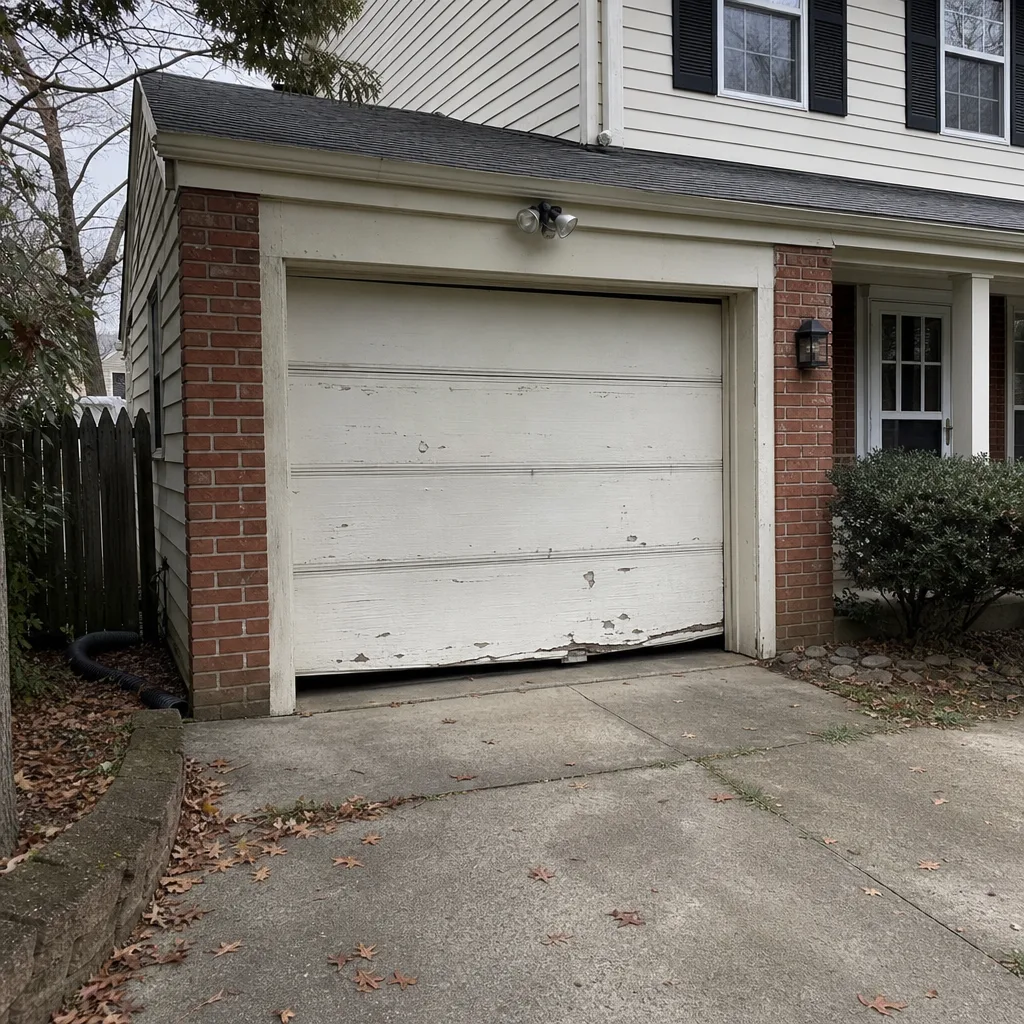 Before
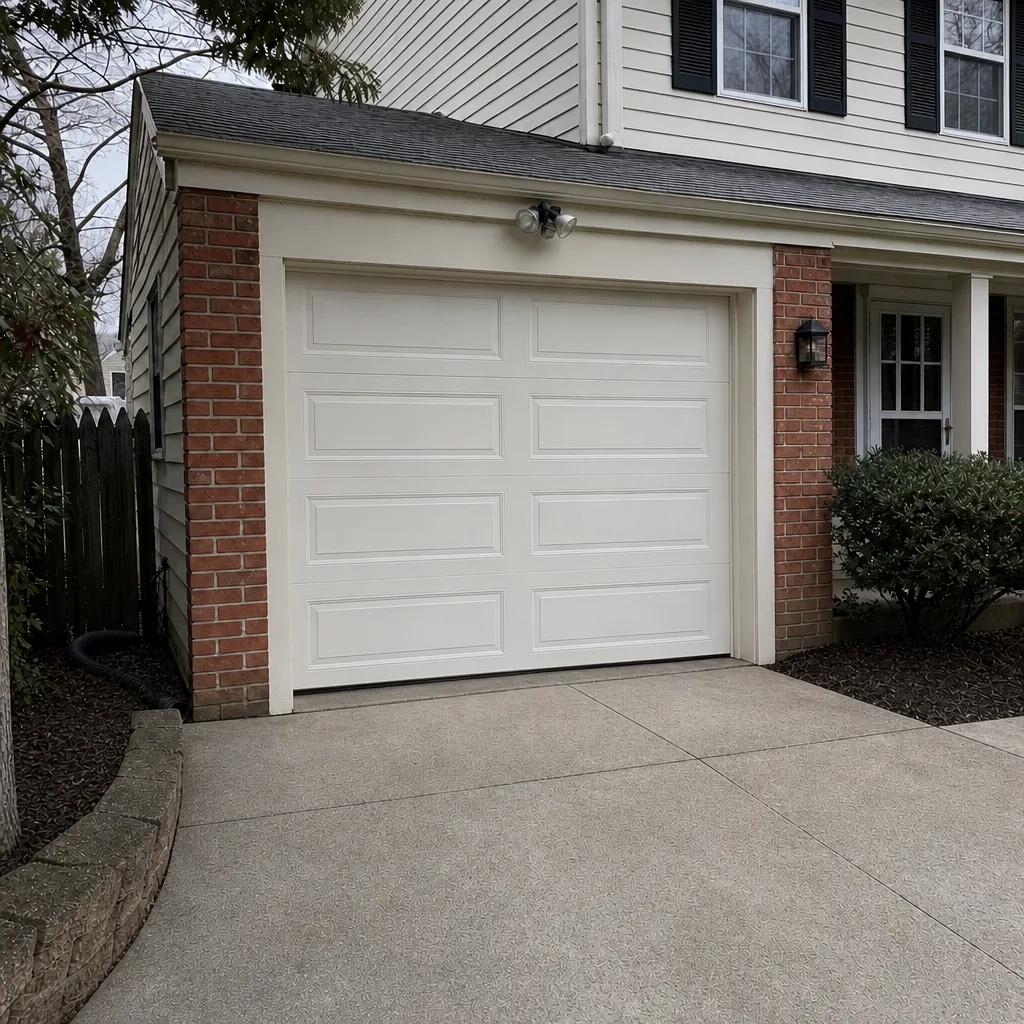 After
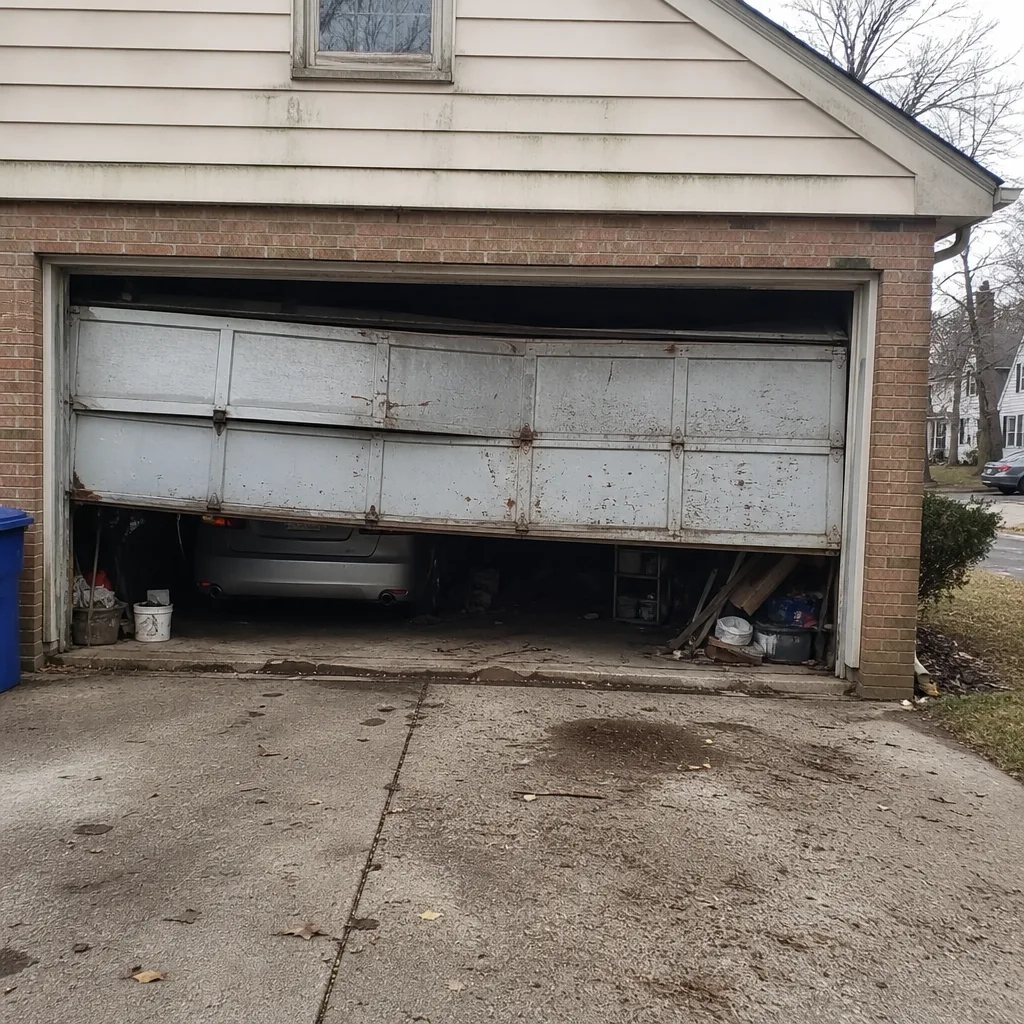 Before
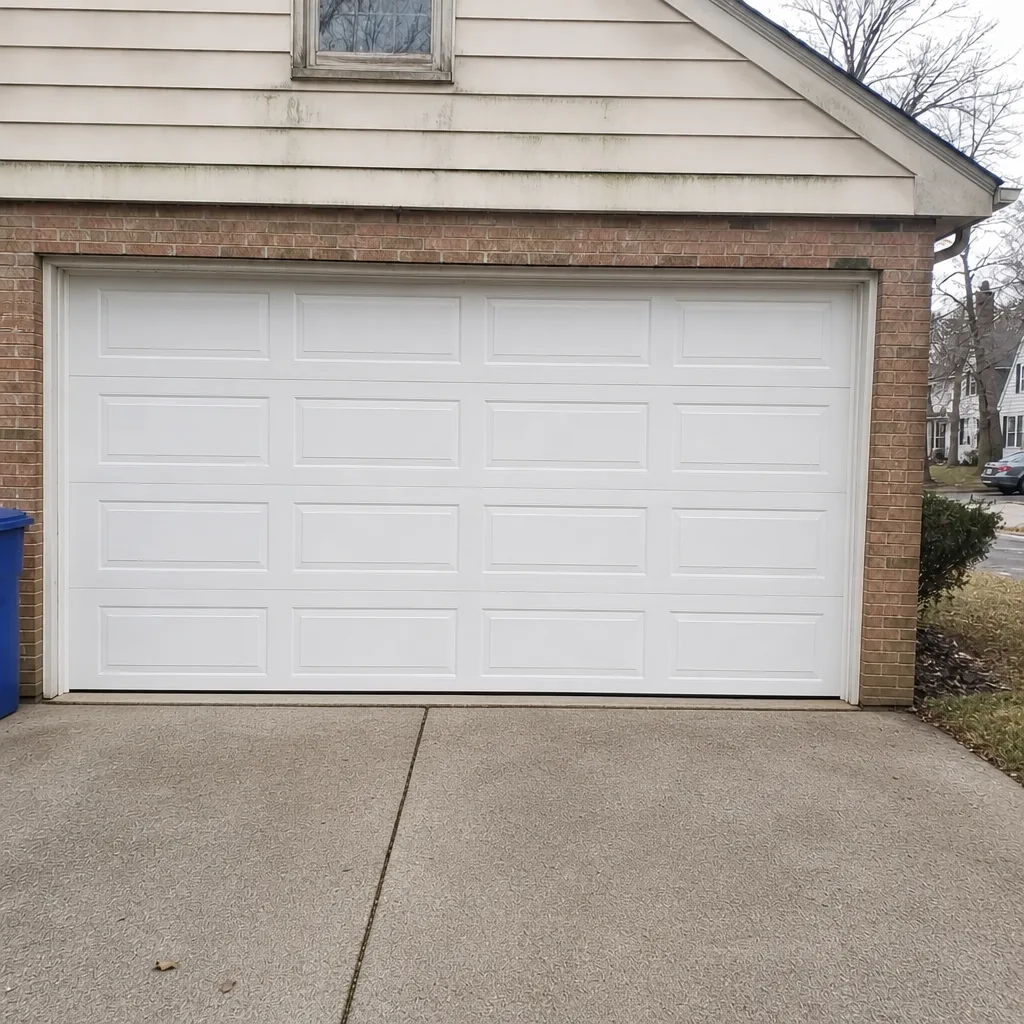 After
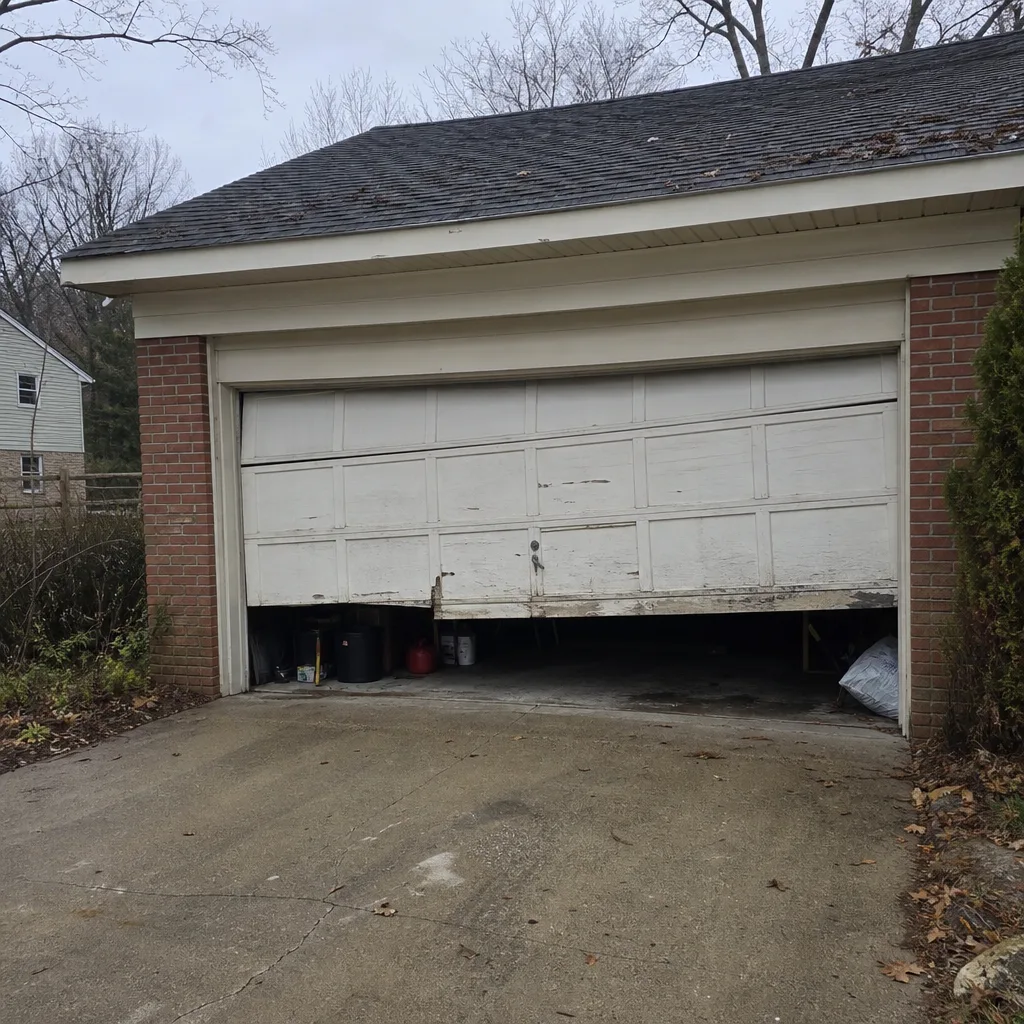 Before
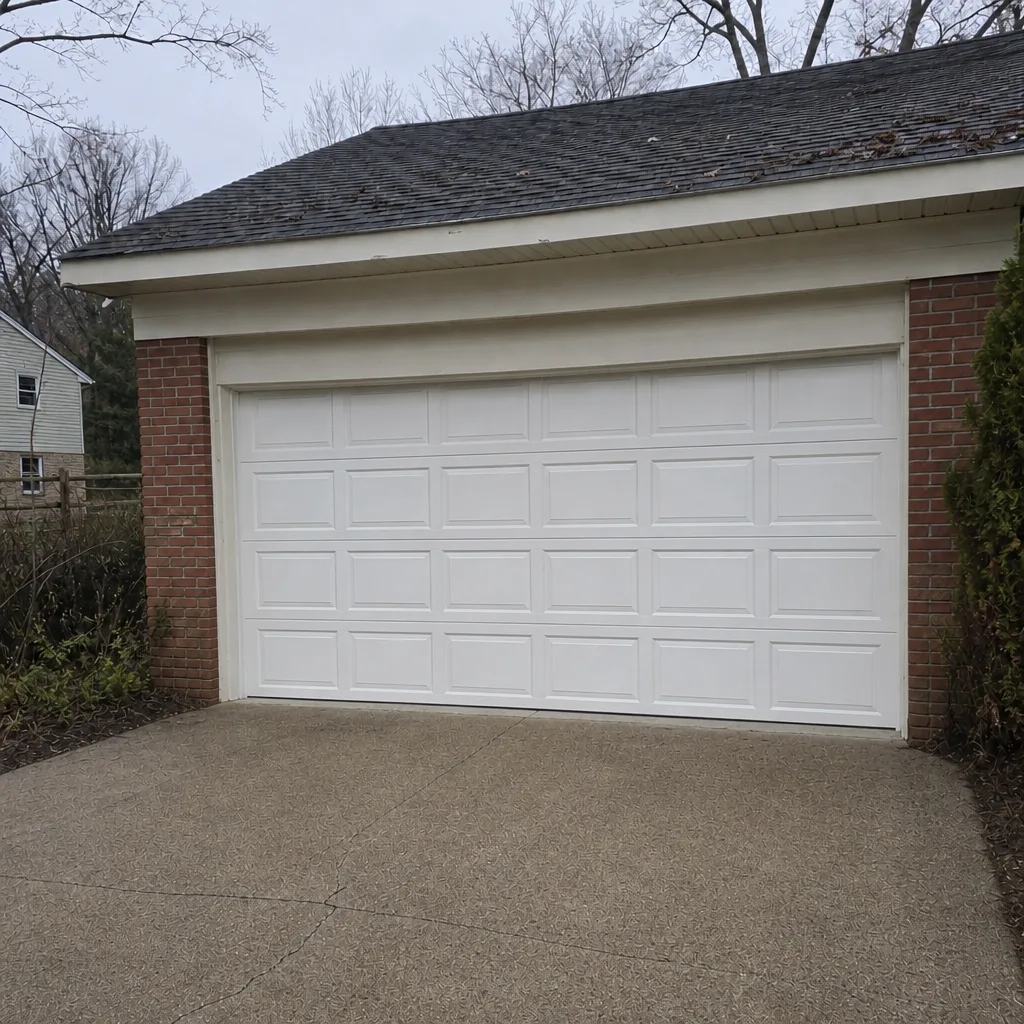 After
Common Mistakes to Avoid
- Treating a torsion spring like a stretched bungee cord. A wound torsion spring carries force many times its visible size, and it doesn’t give any warning before it releases. This is the mistake that causes most garage door injuries, and it’s the one reason we say spring repair is a job for a specialist and not a weekend project.
- Using a screwdriver as a winding bar. A screwdriver shank doesn’t lock into the winding cone the way a bar does. When it slips, the spring recoils, and the hand holding the tool is in the path – improvised tools are the actual source of most DIY injuries, not lack of experience.
- Buying a door online before checking HOA approval. Alexandria has a number of neighborhoods with architectural review requirements, and a pre-approved design isn’t in the manufacturer’s catalog. Start with the HOA guidelines, then measure, then order.
- Skipping the safety reverse test. This is the one maintenance task that protects a child or pet from a closing door. It takes two minutes and requires no tools – test it monthly and adjust the force setting if the door doesn’t reverse.
- Oiling the tracks. Tracks should stay dry and clean – lubricant on the track attracts grit and makes the rollers slide instead of roll. Oil the rollers and hinges, wipe the tracks clean.
- Forcing a door that’s off its track. Pushing a misaligned door back into the track while the spring is loaded can bring the whole door down. If the door is skewed, stop and call – this is where a small repair stays small.
- Assuming homeowner’s insurance covers faulty workmanship. Most policies exclude it. If the door fails after a self-install and damages property, the workmanship exclusion is usually the first clause your adjuster points to.
When to Call a Professional
Call a professional the moment the problem involves a spring, a cable, the bottom bracket, a door off its track, or an opener that’s not a simple remote pairing. That covers most of what goes wrong with a garage door. If the door is stuck closed or can’t be secured, that’s the emergency case – call right away and don’t run the opener on a door that’s clearly failing. On a door that fails on a Saturday, we’re closed that day, but call anyway and we’ll book you for Sunday. For installation or replacement, the call is a measurement visit and a written estimate, not a same-day repair, and scheduling it early gives you time to confirm HOA approval and any required permit before the door is ordered.
Alexandria Garage Door Repair Co offers free estimates in Alexandria – call (844) 681-5326. We’ll tell you honestly whether the job is one you could do yourself in an hour, or one where the labor cost is buying you safety.
Frequently Asked Questions
No. Garage door springs are under heavy tension and can cause serious injury if they slip or snap, so this is not a safe DIY repair under any circumstances. The correct move is to stop using the door and call a professional who has the winding bars, the training, and the insurance to handle it – our technicians can take care of a spring in a single visit. Call (844) 681-5326 for an exact quote; estimates are free.
Most garage door repairs in Alexandria run from roughly $120 to $450 depending on the part, and spring replacement typically lands in the $180 – $340 range for a single spring, with a matched pair costing about twice that. These are typical estimates – the written estimate sets the final price. Call (844) 681-5326 for an exact quote; estimates are free.
No – we quote and agree the price before any work starts, and the written estimate is what you pay. If we find a related problem once the door is open, we stop and explain the options before touching it, so you’re never handed a bigger invoice than the one you approved. Call (844) 681-5326 to get the estimate started.
Yes. The local pro is licensed and insured as their state requires, and our technicians have up to 14 years of experience working on garage doors and openers. That means the injury risk and the workmanship risk are on their side of the contract, not your homeowner’s policy. Call (844) 681-5326 for an exact quote; estimates are free.
Possibly both. Many cities require a permit for garage door replacement, so start by calling the City of Alexandria’s building department for a definitive answer on your address. Then check your HOA’s architectural guidelines before you buy the door, because a design that isn’t pre-approved can force a costly redo even if the installation itself is perfect.
Only the simplest tasks – battery swaps and re-pairing a remote – are safe DIY. Full opener replacement involves the door’s safety reverse setting, the travel limits, and the mounting bracket, and getting any of those wrong can leave a door that closes on a person or a car. It’s also the kind of electrical and mechanical combination where a professional diagnosis of brands like Chamberlin or Genie saves both time and money. (Note: the correct spelling is Chamberlain.) Call (844) 681-5326 for an exact quote; estimates are free.
The Bottom Line
The DIY vs professional decision for a garage door in Alexandria comes down to one question: is the part you’re touching holding stored energy? If it’s a remote, a roller, a lubricant point, or a safety test, the answer is no – do it yourself, do it monthly, and save the service call. If it’s a spring, a cable, a bottom bracket, or a door off its track, the answer is yes – and the savings don’t exist, because the labor cost is priced against a real injury risk and a real insurance gap. Read your HOA guidelines before you buy a door, call the city before you schedule installation, and treat any sign of spring failure as a call, not a project. Every estimate we give in Alexandria is free, written, and agreed before the work begins.
If you’d rather have a specialist look at the door than guess, call Alexandria Garage Door Repair Co at (844) 681-5326 for a free estimate. We’ll tell you straight whether it’s a fix or a replacement, and the price we quote is the price you pay.
Written by the team at Alexandria Garage Door Repair Co.