Last updated November 22, 2026
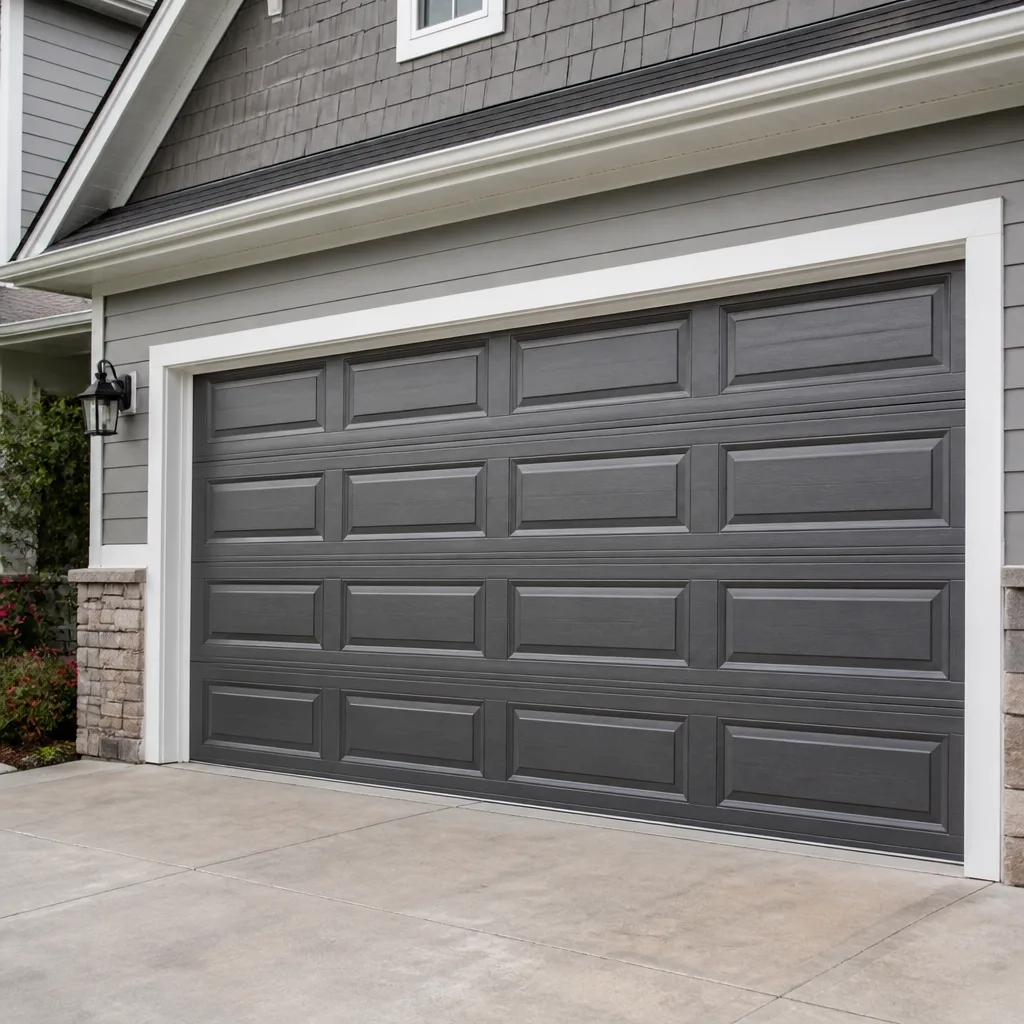 Raised-panel steel
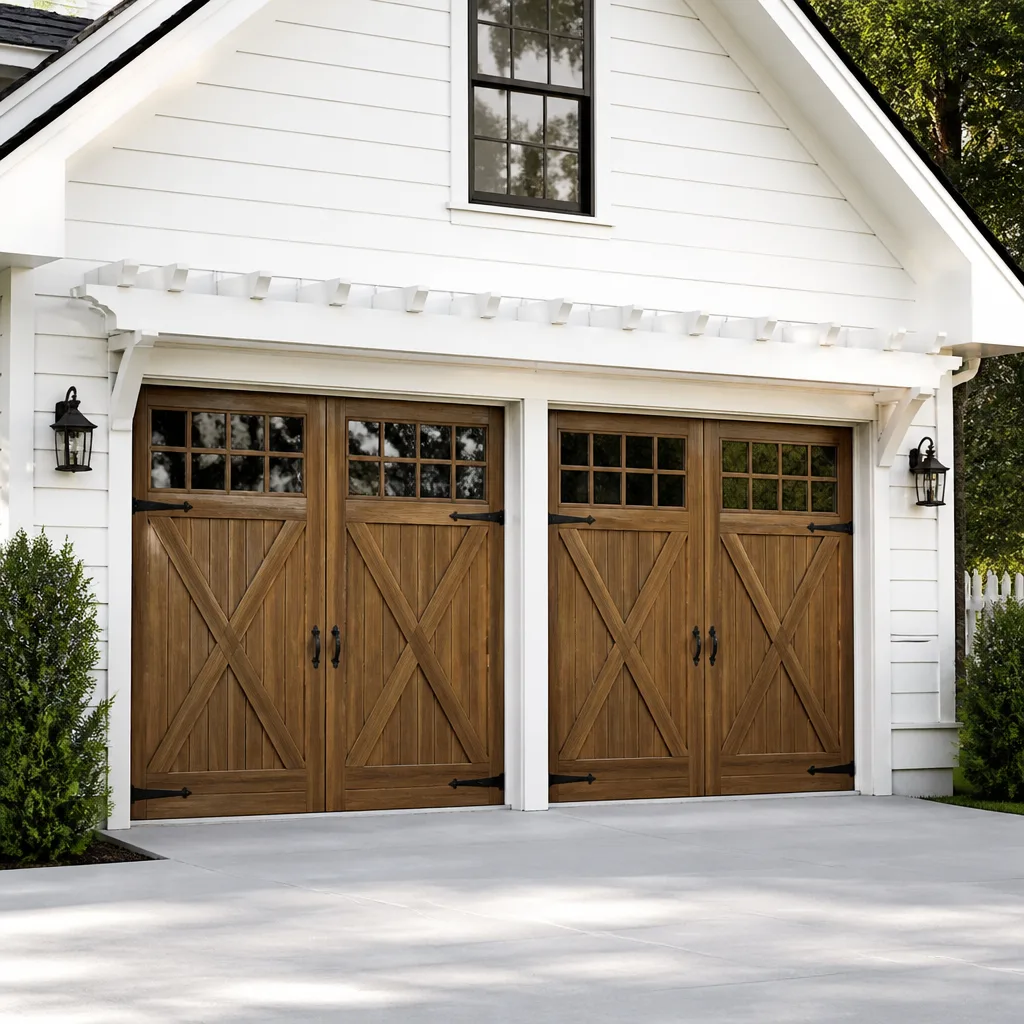 Carriage house
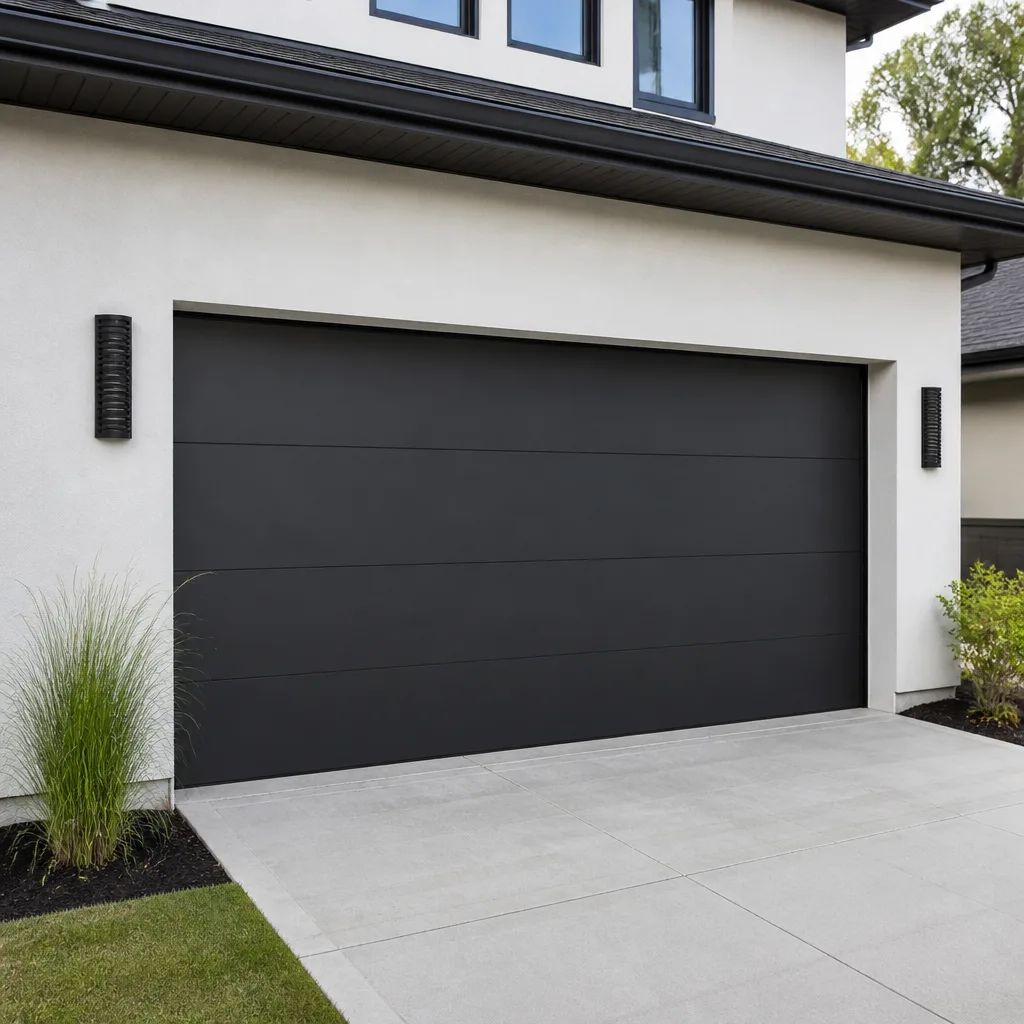 Modern flush
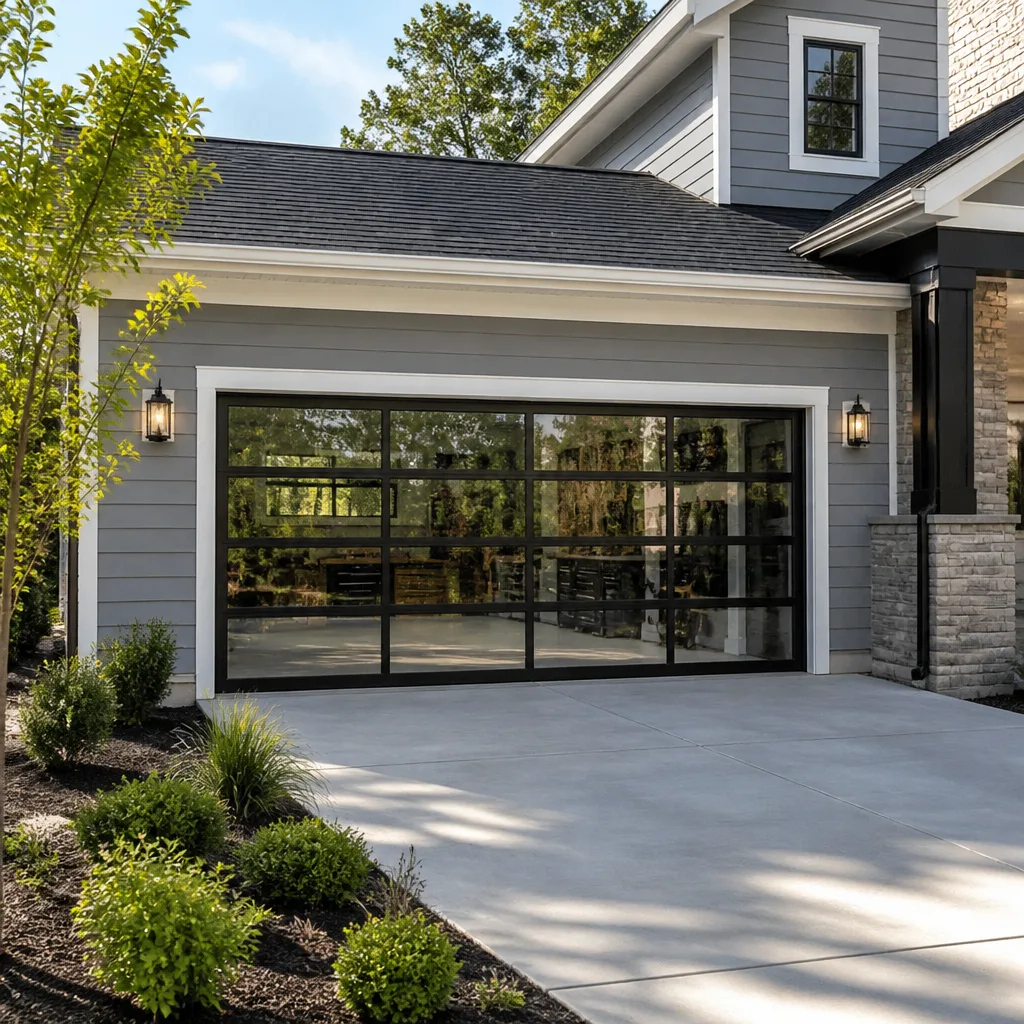 Full-view glass
 LiftMaster openers
 Chamberlain openers
Full 25-point door and opener safety check with every visit - springs, cables, rollers, tracks, and your LiftMaster or Chamberlain opener included
You get a price before we start. It does not change when the pro arrives.
Get your free estimateGarage Door Emergency Preparedness Guide for Alexandria Homes
Most garage door emergencies in Alexandria aren’t caused by the door itself. They’re caused by a homeowner standing in the dark, phone in hand, discovering the release cord is tangled in a bicycle hook or the battery backup died eight months ago. The door that worked every morning for years has suddenly become a twelve-hundred-pound problem, and the person attached to it has no plan. That’s the gap this guide closes. What follows is the practical sequence Alexandria homeowners should know before a Nor’easter knocks out power on your block or a storm strip tears a panel loose: how to release each type of opener by hand, how to secure a door you can’t close, what to photograph in the first half hour, and how to tell a real garage door specialist from a lead-generation call center. Read it once now and you’ll resolve the next emergency in minutes instead of hours.
Quick Answer
Garage door emergency preparedness for Alexandria homes comes down to three things: knowing where your manual release cord is and how it works with your specific opener, having a temporary way to secure a door that won’t close after a storm or spring failure, and keeping a phone number for a dedicated garage door specialist rather than a general handyman. Do those three things before the emergency arrives and you turn a day-blocking ordeal into a fifteen-minute fix.
Styles & brands we work with
- Raised-panel steel
- Carriage house
- Modern flush
- Full-view glass
- LiftMaster openers
- Chamberlain openers
Table of Contents
- How Do You Manually Release a Garage Door by Opener Type?
- What Does a Nor’easter Do to an Older Sectional Door?
- How Do You Temporarily Secure a Door With a Failed Spring or Damaged Panel?
- Why Is Spring Failure a Job for a Specialist?
- What Should You Photograph and Report After Storm Damage?
- How Do You Vet an Emergency Garage Door Specialist in Northern Virginia?
- What Belongs in an Alexandria Garage Door Emergency Kit?
- What Maintenance Prevents the Emergency in the First Place?
How Do You Manually Release a Garage Door by Opener Type?
The manual release on virtually every residential garage door opener is a red cord or handle hanging from the trolley carriage near the door. You pull it down toward the floor, which disconnects the door from the opener rail, and then you lift the door by hand. That much is universal. What differs by opener type is how the door behaves once it’s disconnected and how you should operate it safely. In Alexandria homes we encounter three drive types most often, and each has a slightly different feel in the hand.
Chain drive openers
Chain drive units are the oldest and heaviest of the common types, common in older Alexandria houses and in garages that were converted or added onto over the years. The chain itself runs along a metal rail, and the trolley that travels it holds the release. When you pull the cord, you’ll hear a distinct click as the carriage disengages. Lift slowly and let the door come down under control.
Belt drive openers
Belt drive openers use a reinforced rubber belt instead of a chain and are quieter, which is why they show up in newer construction and in homes where the garage sits under a bedroom. The release mechanism works the same way, but the belt rail can flex slightly if you pull the cord at an angle. Pull straight down, not sideways, and hold the door by its handle rather than by a panel edge.
Screw drive openers
Screw drive openers are less common but still found in Alexandria, particularly on Genie systems. The carriage rides a threaded rod, and the release disengages it from that rod. If the door won’t budge after you pull the cord, don’t force it; the carriage may not have fully released, and yanking risks bending the rail.
The universal manual release sequence
- Make sure no one is standing under the door before you start.
- Locate the red release cord or handle hanging from the trolley near the door’s top center.
- Pull straight down firmly until you feel or hear it disengage.
- Lift the door slowly by its bottom handle, keeping your body clear of the panel edges.
- Lower it under control, or let the torsion springs carry it down gently, and never let it drop.
- To re-engage, close the door fully and pull the release cord toward the opener instead of down.
One caution worth stating plainly: if your opener is a LiftMaster or Chamberlain system with a battery backup, the door may run on battery during a power outage and you won’t need the manual release at all. Check for a battery indicator light before you start pulling cords. If you’re not sure what you’re working with, save the troubleshooting for daylight and call us if the door won’t operate correctly.
What Does a Nor’easter Do to an Older Sectional Door?
A Nor’easter driving rain and sustained wind against an older sectional door can force water past worn seals, flex lightweight panels, and put load on a door that was never engineered for that pressure. Alexandria sits inland enough that storm surge isn’t the issue, but the wind-driven rain of a strong Nor’easter still finds every gap. The door that keeps your garage dry the rest of the year can let water in during a single bad storm, and the damage compounds if you don’t catch it early.
What actually fails first on an older door during a storm:
- Bottom seal and weatherstripping. Cracked or flattened seals let wind-driven rain run under the door and pool on the slab.
- Panel seams. Steel panels on older doors may have micro-cracks or rust along the seams that open up under flex.
- Track alignment. A door that’s slightly out of alignment can jump a roller when wind pressure flexes the frame.
- Opener strain. Wind load against the door means the opener has to work harder to close it, and a weak motor may stall or reverse.
- Loose hinges and rollers. Vibration and wind pressure can work fasteners loose over a storm season.
Signs to stop using the door and call a specialist rather than cycling it again:
- The door is visibly bowed or the panels are buckled out of plane.
- You hear a scraping or grinding sound as the door moves.
- The door reverses on its own partway down or won’t close fully.
- The door sits crooked, with one side higher than the other.
- The opener strains loudly or the door moves in jerks.
If any of those show up after a storm, resist the urge to cycle the door repeatedly to “see if it’s just stuck.” Every cycle stresses a possibly bent track or a compromised panel. Leave it alone and get a specialist out to assess it. The same logic applies to your garage door repair needs after any storm: diagnose before you operate.
How Do You Temporarily Secure a Door With a Failed Spring or Damaged Panel?
When a spring fails, the door won’t stay up because the spring is what counterbalances its weight. When a panel is torn loose in a storm, the door may not close at all. Either way, your home is now open to the street and to the weather, and you need a way to secure it while you wait for repair. Your goal is simple: keep the door closed and locked until a specialist can get to it.
- Get the door closed. If it’s up and staying up, lift it by hand and walk it down slowly, keeping clear of the edges. If it’s partially down, get it fully down if you can do so without forcing anything.
- Lock the door itself. Most garage doors have a manual slide lock on the inside of the track on one or both sides. Slide the lock bolt into the track if it’s present.
- Add a temporary brace. A piece of lumber braced horizontally against the door’s inside face and jammed against the garage door track frame on both sides can hold the door in place from the inside, so long as it doesn’t put pressure on the door panels themselves.
- Block the vehicle. If your car is inside, don’t start it or try to move it until the door is stable; the exhaust and motion will only complicate things.
- Keep the door on its tracks. Don’t prop it with a chair, a trash can, or a block of wood under the bottom edge. Those will slip and the door can come down hard.
If the door won’t close because a panel is bent or the track is damaged, the door is best left up with a secondary barrier inside the garage if you have one. Never try to bend a panel back into shape yourself; the metal is under tension and the door can suddenly drop. Call a specialist to assess it, and if you’re going to be away from the home, call us for an emergency assessment.
Why Is Spring Failure a Job for a Specialist?
Garage door springs are the highest-tension component of any residential door. They store enough force to lift hundreds of pounds of door weight, and when a spring fails it does so with a sharp crack that startles the whole house. The reason spring repair is a specialist job and not a homeowner repair is simple: the springs are under load even when the door is closed, and the tools and technique required to safely de-tension and replace them aren’t something to learn from a video in your driveway.
What you should know about spring failure:
- You’ll know it happened. A loud bang from the garage and a door that suddenly won’t lift or won’t stay up are the usual signs.
- Don’t touch the springs. Whether they’re torsion springs above the door or extension springs along the sides, they can release stored energy violently if a bracket or cable is disturbed.
- Don’t run the opener. The opener will strain against the full weight of the door and may strip its gear or burn out the motor. This turns a spring repair into a spring-and-opener repair.
- Don’t try to lift the door alone. An unassisted door on a broken spring can weigh far more than a person can safely control.
Our technicians have up to 14 years of experience with spring repair, and it’s one of the reasons we work as a dedicated garage door company rather than a general handyman outfit. When a spring fails at your Alexandria home, call a specialist and leave the springs alone in the meantime. Spring failure is a job for a specialist, and it’s one of the parts of our work we take the most seriously.
What Should You Photograph and Report After Storm Damage?
The first 30 minutes after storm damage are the best window for documenting it. Once the rain stops, neighbors and cleanup crews start moving around, and details like the position of a fallen branch or the way a panel bent get lost or disturbed. Photograph before you touch anything.
What to photograph
- Wide shots of the entire garage door and the driveway from the street.
- Close-ups of any bent, dented, or torn panels.
- The track on both sides, including any sagging or separated sections.
- The springs and cables from a safe distance: don’t reach in or adjust anything.
- The opener unit and rail, plus any error code lights on the motor.
- Water intrusion: photos of wet floors, wet drywall, and any sagging ceiling in the garage.
- Any damage to the door frame, header, or surrounding siding.
What to report and to whom
- Your insurance carrier. Call the claims line and describe the damage in plain terms. Ask what documentation they need and whether they require a written estimate before work begins.
- Your photos and video. Keep the originals; don’t crop or edit them.
- A written estimate from a specialist. Insurance adjusters need a line-item estimate, not a verbal guess. Call us for a free written estimate you can submit.
One caution: don’t discard damaged parts, even a broken spring, before your adjuster has a chance to see them. If you need to clear the door to open the garage, set the damaged parts aside and photograph them first.
How Do You Vet an Emergency Garage Door Specialist in Northern Virginia?
Search “garage door emergency” in Alexandria and you’ll find two very different kinds of business in the results. One is a dedicated garage door company that does the work with technicians trained on doors and openers. The other is a lead-generation service or a multi-trade general contractor that takes your call, sends your information to whoever’s available, and may not have a door specialist on staff. The difference shows up in how the job gets fixed.
How to tell the difference:
- Ask what the company actually does. A dedicated garage door company will name repair, springs, openers, and installation as its work. A generalist will list doors as one item among many.
- Ask about brands. A specialist will recognize your opener brand (LiftMaster, Chamberlain, Genie, Craftsman) and your door brand (Clopay, Amarr, Wayne Dalton, Raynor) by name and know the common failure points for each. If the person on the phone can’t tell a belt drive from a screw drive, keep looking.
- Ask who’s coming. If the company can’t tell you whether a door specialist or a general handyman will arrive, you’re talking to a dispatcher for a network.
- Ask for the written estimate process. Emergency quotes should still be written and agreed before work begins. A company that quotes a range on the phone and hands you a bill with surprises on it isn’t a company to trust.
- Ask what happens if springs are involved. Springs are the highest-risk component on the door. A specialist will tell you straight that springs get replaced, not patched, and that the door shouldn’t be operated until then.
We’re the first kind: Alexandria Garage Door Repair Co is a dedicated garage door specialist, not a multi-trade contractor. We work on your brand, we quote before we work, and we can come out for emergencies when the door won’t open and your day can’t wait. If a company you call won’t answer those five questions straight, try us instead.
What Belongs in an Alexandria Garage Door Emergency Kit?
Fifteen minutes of shopping and a small box on the garage shelf will save you a much worse night. Keep this in your garage where you can reach it without moving the car, and check it once a season.
- A flashlight and spare batteries. A power outage means no overhead light and often no phone charge.
- A printed card with your opener brand and model number. You’ll need it when you call for help. It’s usually on the motor housing under the light cover.
- A printed card with our phone number, (844) 681-5326. Put it on the wall, not just in your phone.
- A pair of heavy work gloves. Garage door panel edges are sharp.
- A short piece of 2×4 lumber. For bracing a door that’s been pushed in by wind or a struck object.
- Your insurance carrier’s claims number. On the wall next to ours.
- A phone camera rolled and ready. You’ll want to photograph before you touch anything.
- A note of your door’s approximate weight and year. Approximate is fine. It helps a specialist understand what they’re dealing with.
The most useful thing in the box is the printed list of what to do and who to call, because the person reading it may not be the person who assembled it. A family member or house sitter should be able to pick up that card and know how to release the door by hand and who to call.
What Maintenance Prevents the Emergency in the First Place?
Most garage door emergencies don’t start with a bang; they build quietly. A roller that’s worn flat, a hinge that’s loose, a lubricant that’s dried out, or a seal that’s cracking all telegraph a future failure months before it happens. Ten minutes twice a year, in spring and fall, catches the small problems before they become calls.
- Look at the springs. A dark gap or a visible stretch in a torsion spring means it’s failed or is about to. Don’t touch it; note it and call.
- Check the rollers and hinges. Wobble in a hinge, a flat spot on a roller, or missing screws all need attention.
- Test the safety reverse. Put a piece of scrap wood under the door’s path, close it, and confirm the door reverses when it meets the obstruction. Do the same with the photo-eye sensors by blocking the beam.
- Lubricate the moving parts. Use a garage door lubricant, not grease, on hinges, rollers, and the spring coils only if you can reach them without touching the tension.
- Check the bottom seal. Run a hand along the door’s bottom edge with the door closed; any gaps or brittleness means water intrusion in the next storm.
- Look at the track. Bent tracks, gaps between sections, and screws backed out of the header all show up during a slow visual inspection.
- Run the opener and listen. A sudden louder grind, a jerk, or a reversing door during a routine open is your early warning.
When you’re ready for maintenance that catches the problems before they fail, that’s what our garage door repair service is for. If your opener itself is the source of trouble, we handle that separately with garage door opener repair. And if a door has genuinely reached the end of its working life and repair no longer makes sense, we do garage door installation as well, so you’re not starting over with a second company.
Common Mistakes to Avoid
- Pulling the release cord while standing under the door. If the door has a failed spring, the full weight will come down when you pull the cord. Stand to the side and confirm no one is under the door first.
- Cycling a storm-damaged door to “see if it’s stuck.” Every cycle stresses a bent track or bent panel further. If the door looks wrong, leave it alone and call.
- Running the opener on a broken spring. The opener will fight the full door weight and may burn out the motor or strip the gear, turning a spring repair into a spring-and-opener repair.
- Calling a general handyman or a lead service. A door-specialist answers questions about brand-specific failures and releases. A generalist often can’t, and the job may come back twice.
- Filing an insurance claim before photographing. Once storm damage is disturbed, the evidence is gone. Photograph first, then call.
- Leaving the door open with a failed spring overnight. Some manual lock or interior brace is better than nothing, and a specialist can often secure it the same day.
- Skipping the twice-a-year maintenance check. The small stuff you’d notice during a fall inspection is usually the same small stuff that becomes the emergency in the spring.
See the difference
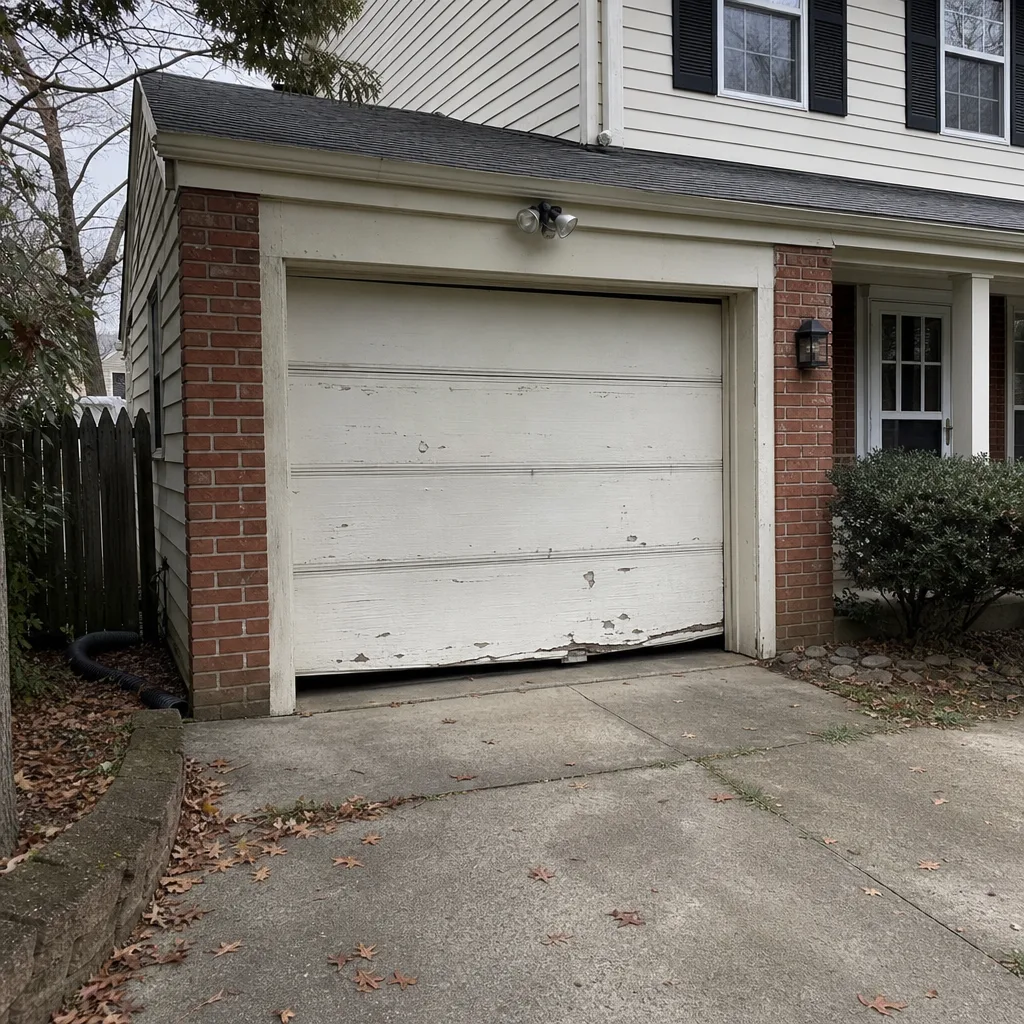 Before
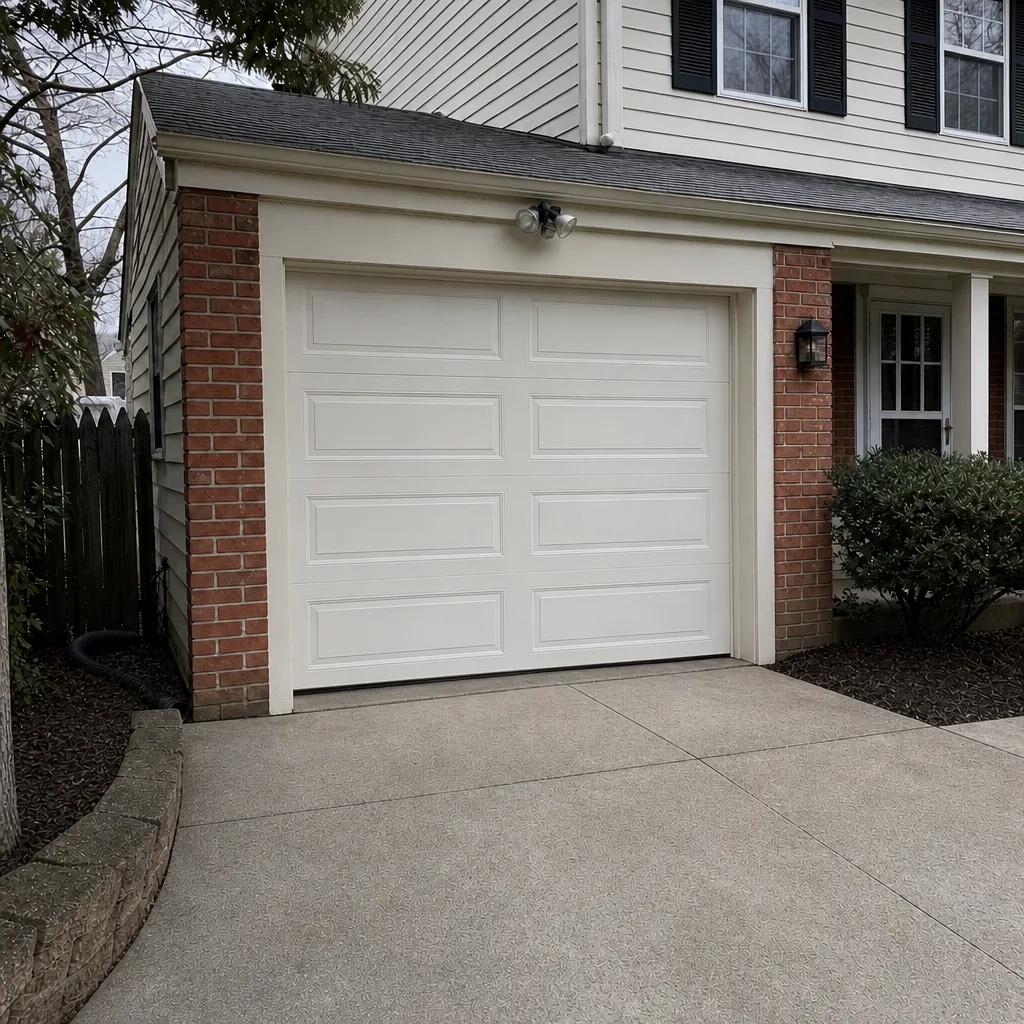 After
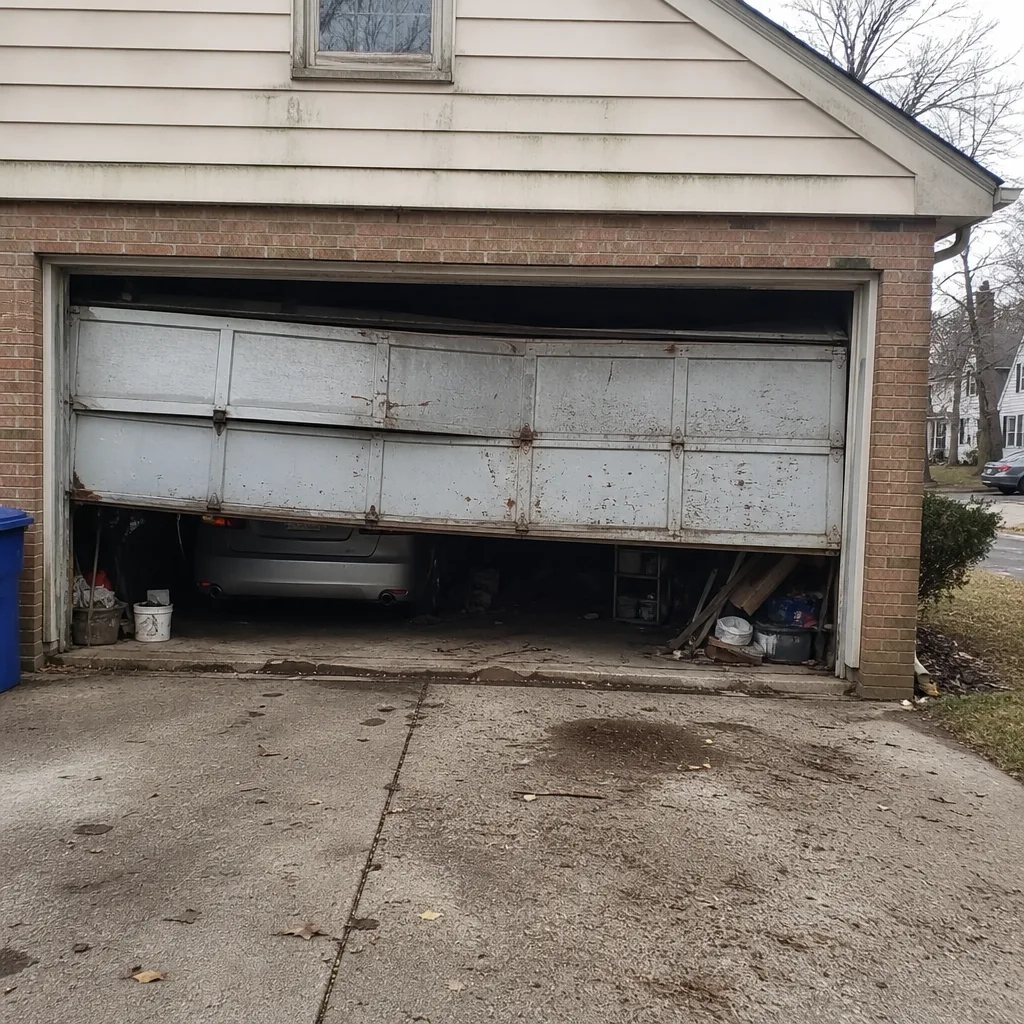 Before
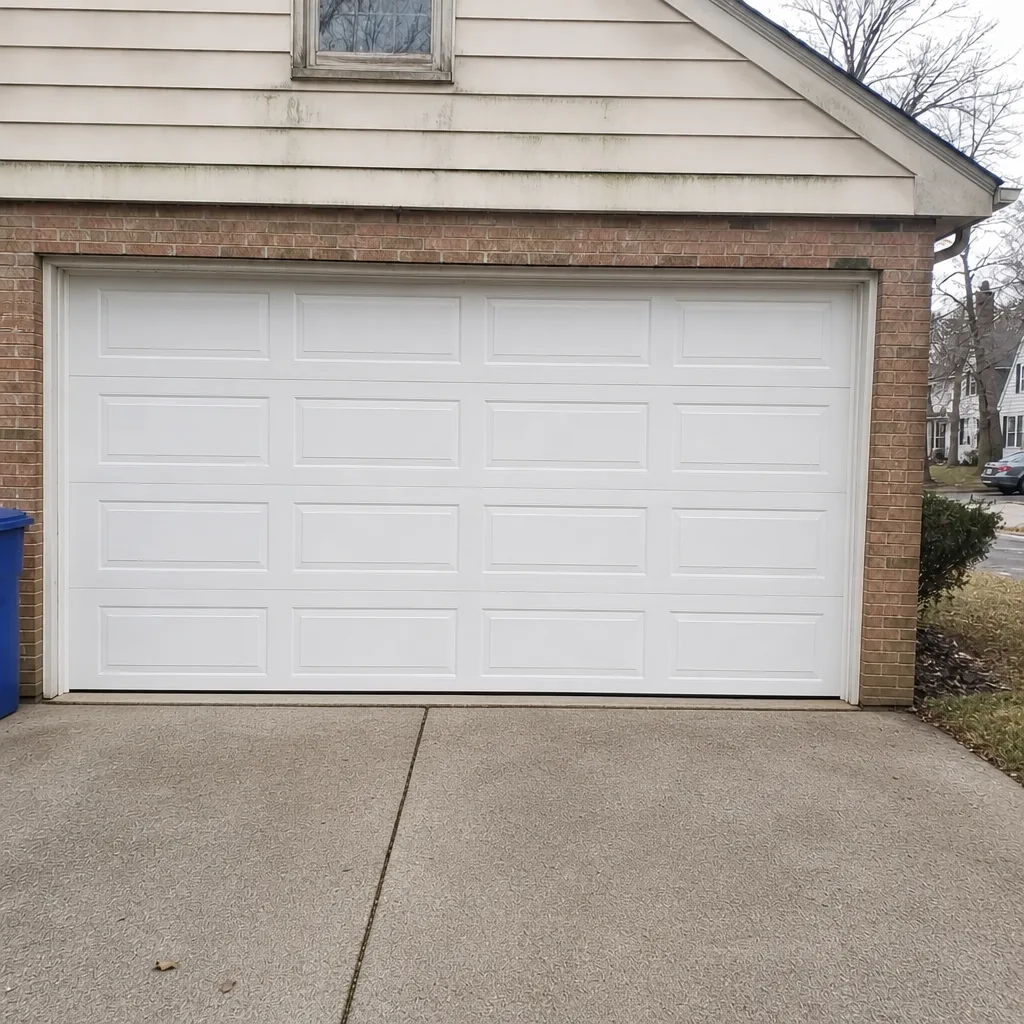 After
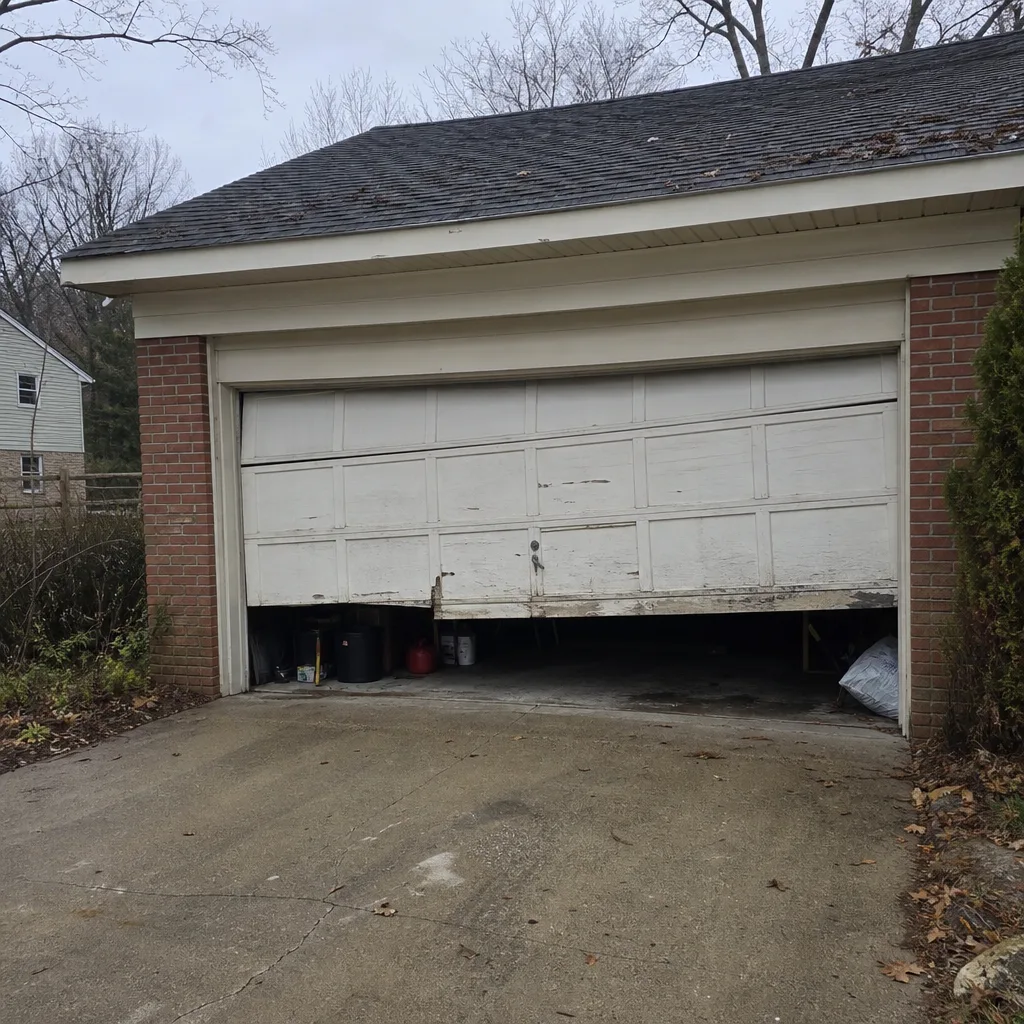 Before
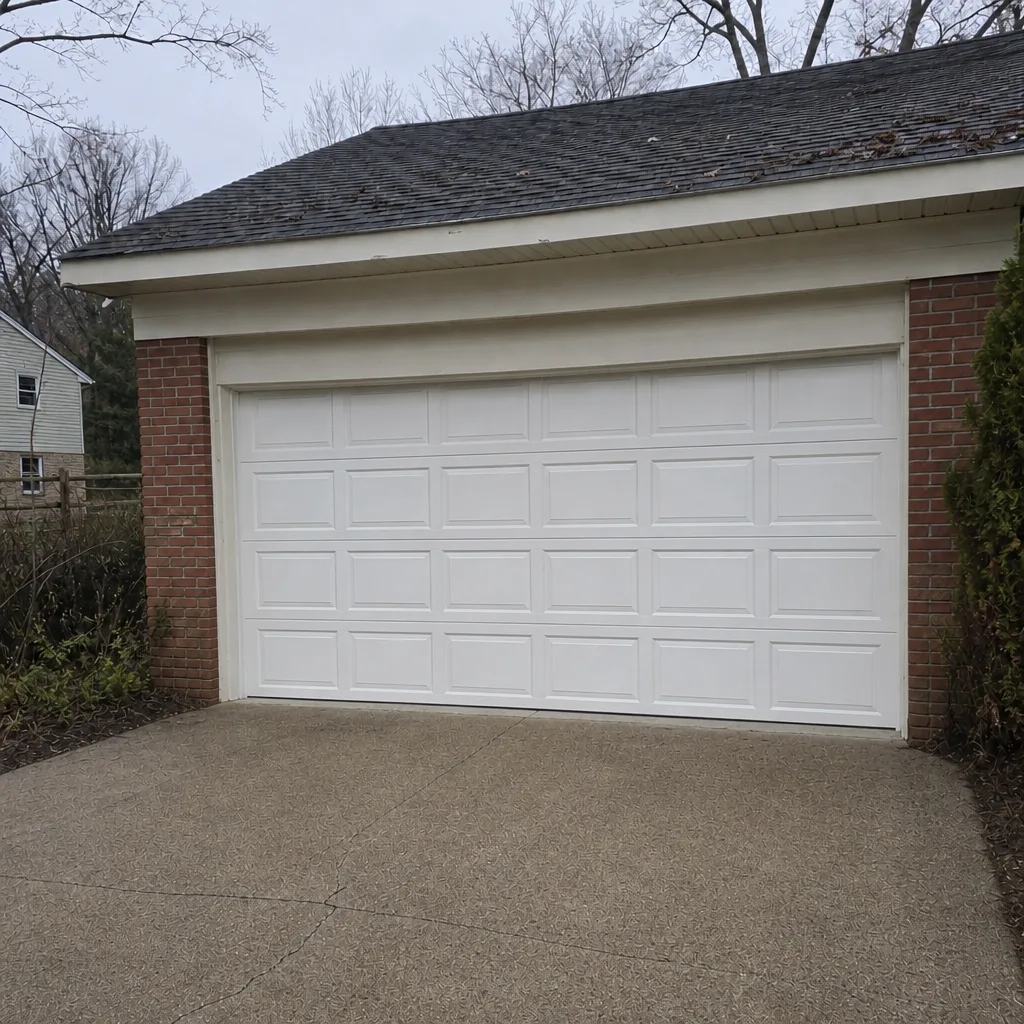 After
When to Call a Professional
Call us when the door won’t open and your day can’t wait: a spring has snapped, the door is stuck up or down, or the opener has failed and the car is trapped inside. Call us when a storm has bent a panel, pushed the door off its track, or driven water into the garage. Call us when the door is crooked, scraping, reversing on its own, or making a noise it didn’t make last week. And call us when the maintenance inspection turns up something you don’t want to touch. Our technicians have up to 14 years of experience on springs, cables, panels, tracks, and the smart openers that run them, and we work on the major brands in Northern Virginia homes. Alexandria Garage Door Repair Co offers free estimates in Alexandria. Call (844) 681-5326 and we’ll quote before we work, so the price you agree to is the price you pay.
Frequently Asked Questions
Pull down on the red manual release cord hanging from the trolley carriage near the door’s top center, then lift the door by hand. The cord disconnects the door from the opener, so it moves freely. Pull straight down, not sideways, and stand clear of the door’s path before you lift it. If your opener is a LiftMaster or Chamberlain with battery backup, the door may already run on battery and no manual release is needed.
In most cases, yes. A door that won’t close after storm damage is a security concern, and we treat it as an emergency call. Call (844) 681-5326 for a free estimate and we’ll get a technician out to assess it. In the meantime, don’t run the opener and don’t force the door; leave it in place and keep everyone clear.
Most spring repairs in Alexandria fall in the range of $180 to $340 for a single spring replacement, and a matched pair replaced together usually runs about twice that. The written estimate you receive on site sets the final price, and we quote before any work begins so there are no surprises on the bill. Call (844) 681-5326 for an exact quote; estimates are free.
No. A door with a failed spring is far heavier than a person can safely lift single-handed, and forcing it can damage the door or injure you. Keep the door in its current position and call a specialist to assess and secure it. Don’t run the opener in the meantime, since the strain can damage the motor.
Call a dedicated garage door specialist. Springs, tracks, and openers are the specific hardware a specialist works with; a general handyman may not have the tools, training, or brand familiarity to diagnose the problem correctly. A dedicated company like ours will know your specific brand and model, quote before work begins, and give you a straight answer about whether repair or replacement makes more sense.
Photograph the damage before touching anything: the whole door from the street, close-ups of bent panels, the track, the opener, and any water inside. Then call your insurance carrier and get a written estimate from a specialist for the repair. Keep any damaged parts aside for the adjuster to see. Once that’s done, call (844) 681-5326 for the actual repair.
The Bottom Line
An Alexandria garage door emergency is manageable when you’ve planned for it. Know where your release cord is and how your opener type behaves when disconnected. Keep a small emergency kit on the garage shelf with a flashlight, gloves, our number on the wall, and a 2×4 for bracing. When a storm hits, photograph the damage before you move anything and call your insurer in the first half hour. When a spring fails, stop using the door and leave the springs to a specialist. And when the door genuinely needs help, call (844) 681-5326 and we’ll quote it before we work. The fifteen minutes you spend reading this now is the difference between a bad morning and a fast fix.
Written by the team at Alexandria Garage Door Repair Co.