Last updated November 22, 2026
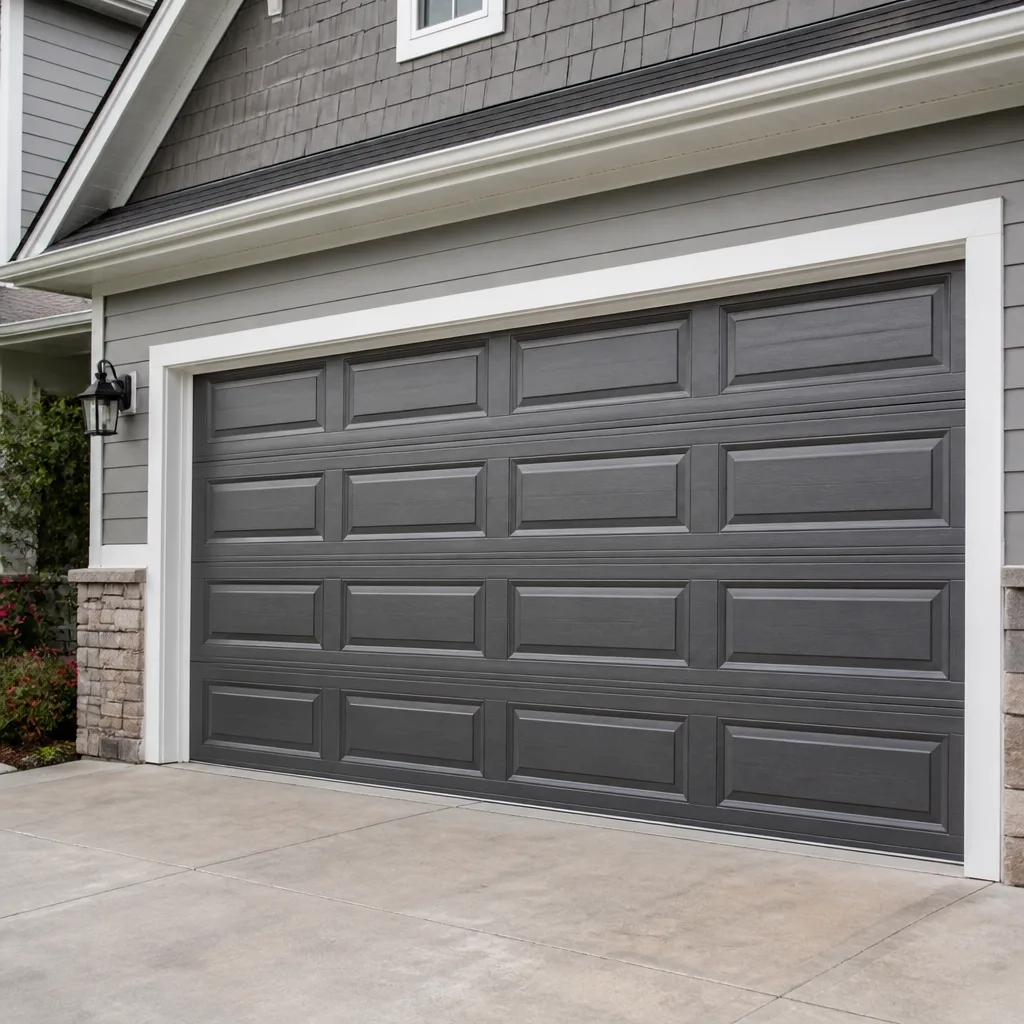 Raised-panel steel
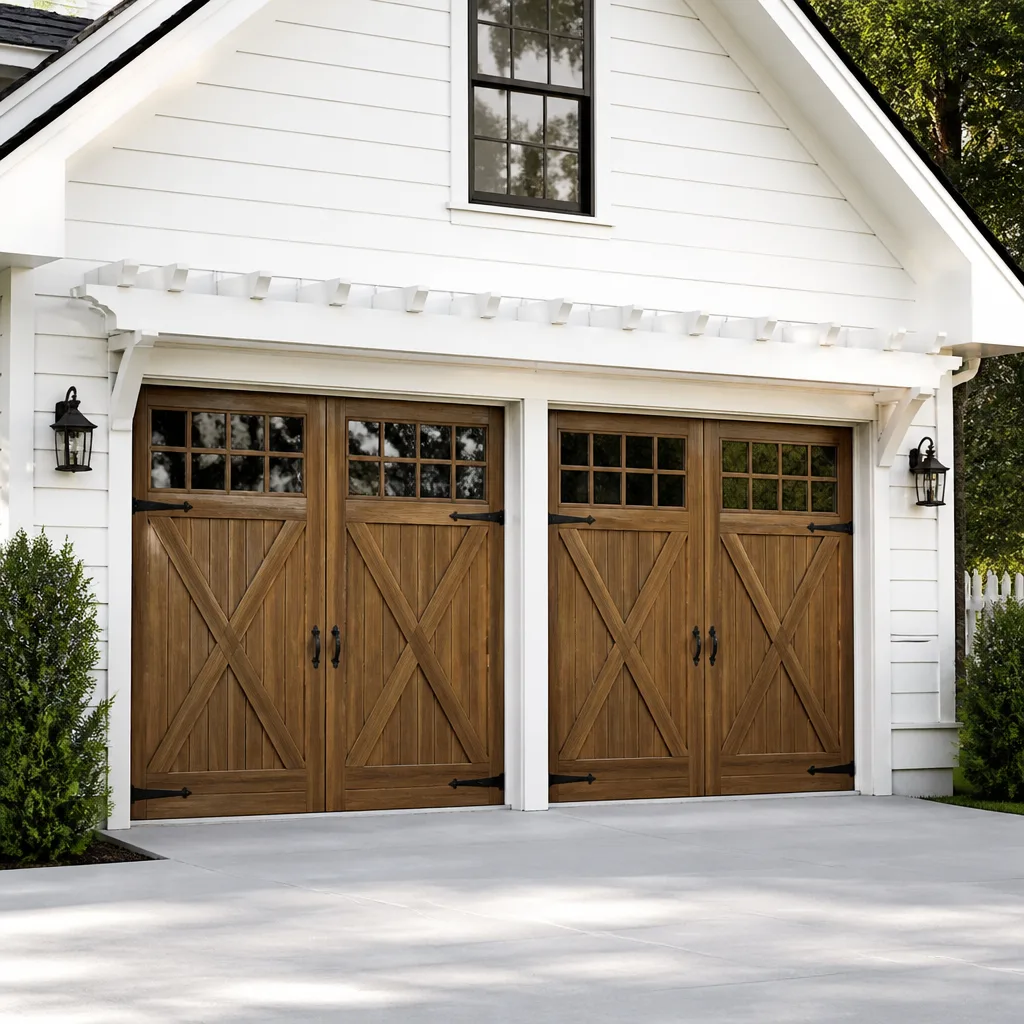 Carriage house
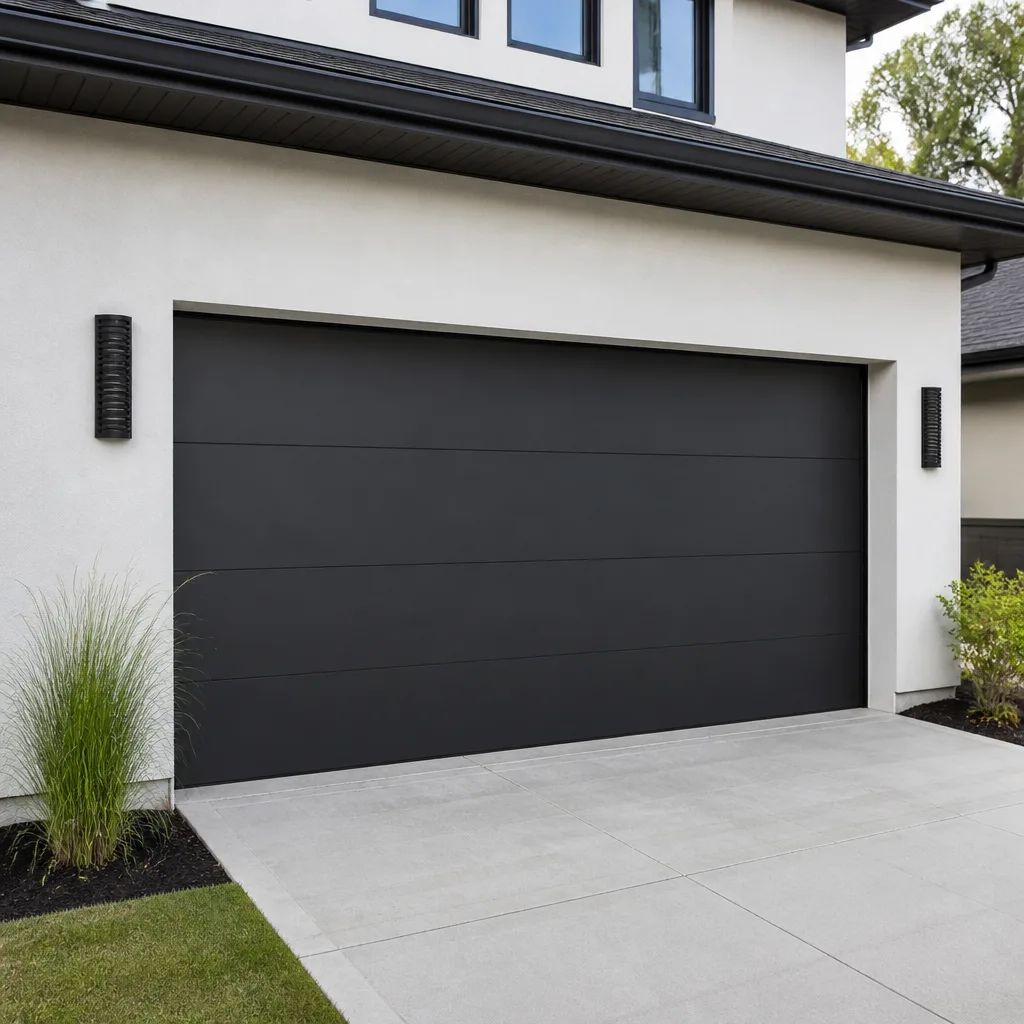 Modern flush
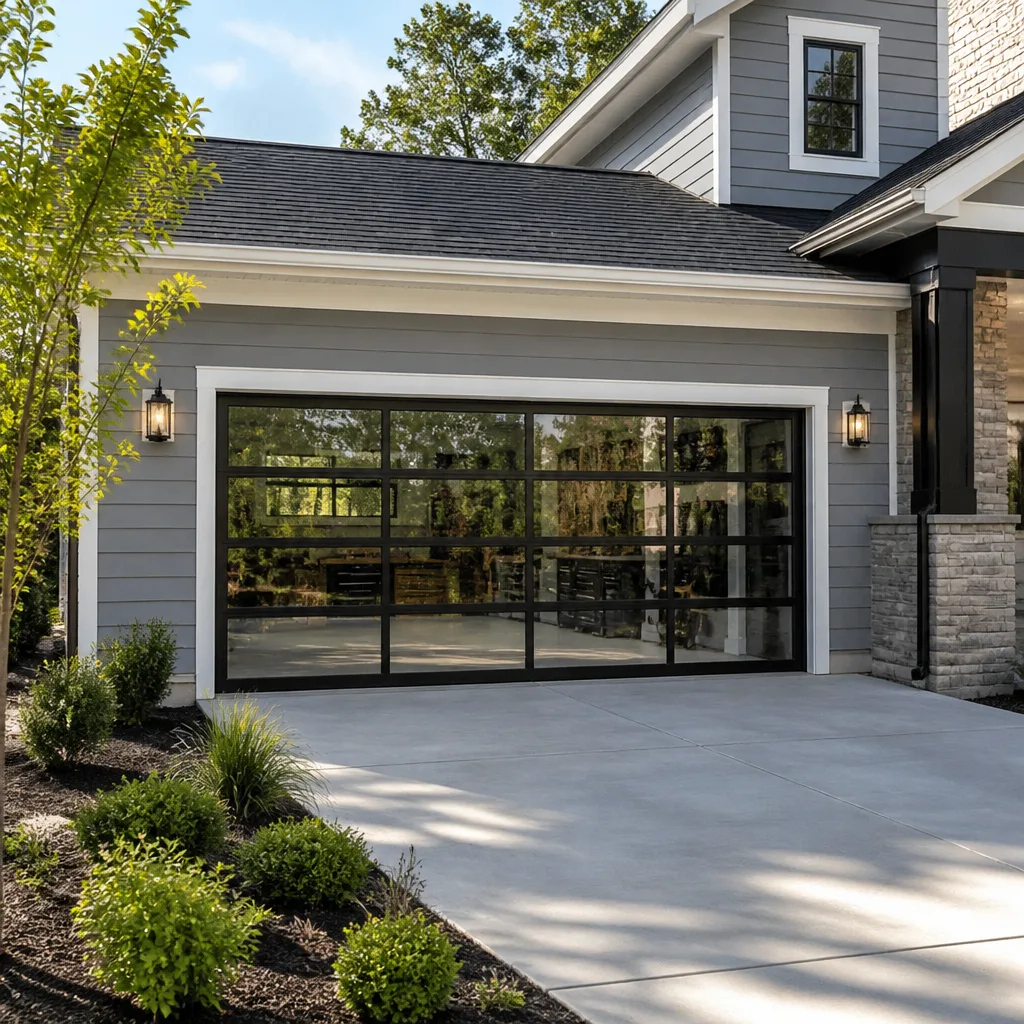 Full-view glass
 LiftMaster openers
 Chamberlain openers
Full 25-point door and opener safety check with every visit - springs, cables, rollers, tracks, and your LiftMaster or Chamberlain opener included
You get a price before we start. It does not change when the pro arrives.
Get your free estimateThe Complete Guide to Garage Doors in Alexandria
Most “complete guides” to garage doors were written for a suburb in Arizona, where stucco is king and nobody has ever argued with an architectural review board about a door panel. Alexandria doesn’t work that way. Here you’ve got century-old brick rowhouses in Old Town, HOA-governed communities out in Kingstowne and Cameron Station, and a Potomac-basin summer that does things to wood and steel that a national average doesn’t capture. Torsion springs here live a different life than they do in dry air. Door color choices can hinge on a covenant you’ve never read. And the permit line between Alexandria City and Fairfax County changes what a straightforward replacement actually involves. This guide treats your block, your jurisdiction, and your building stock as the variables they are, so the decisions you make about repair, opener replacement, or a full new door are grounded in how things actually work in Alexandria.
Quick Answer
Garage door work in Alexandria splits into two tracks: repair (springs, cables, panels, openers, tracks) and replacement (a measured, ordered, scheduled installation). Repair can often be handled quickly, sometimes the same day, while installation is always measured first, priced in writing, and scheduled once the door arrives. The biggest local factors that affect what you choose and what it costs are HOA architectural rules, the permit requirements of your specific jurisdiction, the age and material of your door, and the humidity-driven wear that shortens spring life in the Potomac basin.
Styles & brands we work with
- Raised-panel steel
- Carriage house
- Modern flush
- Full-view glass
- LiftMaster openers
- Chamberlain openers
Table of Contents
- How a Garage Door System Actually Works
- Repair or Replace? How to Decide in Alexandria
- HOA Rules in Del Ray, Cameron Station, and Kingstowne
- Why Potomac-Basin Humidity Shortens Spring Life
- Permits: Alexandria City vs. Fairfax County Parcels
- Door Styles That Fit Alexandria’s Architecture
- Openers and Smart-Home Integration
- What “Same-Day Service” Really Means Around Old Town
How a Garage Door System Actually Works
A garage door is a balanced system, not a single moving part. The door itself is the visible piece, but the parts that do the real work are hidden: the torsion springs (or extension springs on older and lighter doors), the cables that run from the springs to the bottom corners, the drums the cables wind around, the rollers that ride in the tracks, and the opener that lifts and lowers the whole assembly. Every part is engineered to carry a share of the door’s weight, and the door is designed to feel almost weightless when you lift it by hand. When one piece fails, the rest of the system absorbs the load, which is why a snapped spring can kink a track or jump a cable within seconds.
The torsion spring is the part that fails most often, and it’s the part that carries the most stored energy. A torsion spring is a tightly wound coil mounted on a shaft above the door. It’s under tension even when the door is fully open, which is why spring work is the one job in this trade that genuinely requires a trained technician. If a spring snaps, you’ll typically hear a loud bang from the garage, and the door will suddenly feel heavy or won’t lift at all. Cables can also snap or come off their drums, and rollers wear flat over time, causing the door to shudder as it travels. Openers add another layer: a motor, a drive (belt, chain, or screw), a logic board, safety sensors near the floor, and on modern units a Wi-Fi module for remote control. From the opener to the panel to the spring, all of it has to work together for the door to open smoothly and close safely. Understanding these parts makes the difference between a repair that lasts and one that fails again in a few months.
Safety note: Never attempt to adjust, remove, or replace torsion springs, cables, or drums yourself. These parts are under extreme tension and can cause serious injury in an instant. Spring failure is a job for a specialist, always.
Repair or Replace? How to Decide in Alexandria
In our experience, most Alexandria homeowners assume a door that’s acting up needs to be replaced, and most of the time it doesn’t. A single broken spring on an otherwise sound door is a repair. A door that’s been hit by a car, has a bent bottom section, or is rusted through in multiple panels is usually a replacement. The decision comes down to four factors: the age and material of the door, the scope of the damage, whether the door was ever a good fit for the opening, and how much more life it can reasonably give you. Here’s a practical order of operations.
- Identify what actually failed. If the door is stuck, the opener runs but the door doesn’t move, or the door feels bottom-heavy, the failure is likely in the spring, cable, or drum system. A pro can tell you in a few minutes.
- Check the door’s structure. Look for sagging panels, cracks in wood sections, rust-through on steel, and dents that have compromised the panel’s shape. Cosmetic dents are fine to live with; structural damage usually isn’t.
- Assess the opener separately. A perfectly good door can outlive its opener. A noisy, straining, or unreliable opener on a solid door is a replacement on its own, not a reason to swap the door.
- Weigh the repair against a replacement. If repairs approach half the cost of a new door and the existing door is already showing its age, replacement often makes more sense. If repairs are a modest fraction of replacement, repair it and get more years out of it.
- Factor in HOA and permit considerations. Replacement triggers architectural review and often a permit. Repair usually triggers neither. If your HOA’s approval process is slow or your jurisdiction’s permit has a review step, repair buys you time.
For a straight repair question, the fastest path is a professional assessment. If you’re ready to move on a replacement, our garage door installation service handles the measure, order, and install in stages, so nothing is ordered until the opening has been measured and the price is in writing. The guiding idea here is simple: same door, fixed right, before anyone talks about replacing it.
HOA Rules in Del Ray, Cameron Station, and Kingstowne
Alexandria has an unusual density of HOA and architectural-review authority, and it matters well before you buy anything. In a community like Cameron Station or Kingstowne, the architectural review committee usually has an approved color palette, approved panel styles (raised-panel is often the default, with carriage-house styles sometimes restricted or sometimes preferred), and a review process for any change visible from the street. In Del Ray, you’re more likely to deal with a neighborhood conservation overlay or a city historic-district review than an HOA, but the principle is the same: the visible face of your door is subject to a standard you don’t get to set alone.
What that means in practice is that color and style decisions come before price, not after. Ordering a door in a color your committee hasn’t approved can mean ordering twice, and the second order is rarely free. Here’s the sequence we recommend every Alexandria homeowner follow before spending a dollar on a new door:
- Request the architectural standards document. Most HOAs will email it the same day. It spells out the approved colors, panel styles, and any prohibition on certain materials.
- Get the submission form and timeline in writing. Ask how long approval typically takes and whether the committee meets monthly or more often.
- Take a photo of your existing door in daylight. This is the reference point your committee will compare the new door against.
- Confirm the door choice against your jurisdiction’s rulebooks. If your house falls under historic review, the standards may be stricter than the HOA’s.
- Keep the approval in a file. If the HOA changes hands or the committee later questions it, you have the record.
The good news: many standard raised-panel doors in white, almond, or sandstone work with the majority of Alexandria HOAs, so the approved choice is usually also a sensible one. Whether you’re replacing a single door or a matched pair, this step alone prevents the most expensive kind of mistake.
Why Potomac-Basin Humidity Shortens Spring Life
Manufacturers rate spring life in cycles, not years, and cycles don’t care about the weather. But real springs in Alexandria don’t see clean cycles. The Potomac basin’s summer humidity and heat do two things to a door system: wood sections absorb and release moisture seasonally, which changes the door’s weight across the year, and steel components see more condensation and oxidation than they would in a dry climate. A torsion spring that’s working against a heavier, swollen door in July is doing more work per cycle than the same spring in a dry, stable climate. Over enough summers, that shows up as shorter spring life than a “10,000-cycle” or similar rating would suggest.
Three things reduce this effect in Alexandria homes:
- Proper sealing. A well-sealed door and weatherstrip keeps the door from wicking moisture and keeps the weight more stable across seasons.
- Finish maintenance. A painted or powder-coated steel door resists oxidation; a wood door with a failing finish wicks moisture and swells, adding weight year after year.
- Balanced hardware. Rollers, hinges, and tracks that move freely spread the load evenly, and the springs don’t fight friction on top of weight.
We can’t stop the Potomac basin’s humidity, and no spring in Alexandria gets a longer life for being in a garage. What we can do is measure the door’s balance, replace springs with a matched pair when a pair has reached its end, and make sure the rest of the system is moving cleanly so the springs aren’t doing extra work. That’s the practical way to stretch spring life in this climate. If you hear a sharp bang from the garage or the door has suddenly become too heavy to lift, treat that as a spring failure and stop using the door.
Permits: Alexandria City vs. Fairfax County Parcels
The first thing to establish about permits on a garage door project is where your parcel actually sits. Alexandria is not a single permitting jurisdiction, and properties that carry an Alexandria mailing address can fall under Alexandria City, Fairfax County, or in some cases Arlington County, depending on the parcel’s location. A door replacement in a Fairfax County portion of the Alexandria area is reviewed by Fairfax County, while a project on an Alexandria City parcel is reviewed by the City. The two jurisdictions don’t share rules, so the answer to “do I need a permit?” depends on which one applies to you.
Generally speaking, replacing a garage door of like size and configuration is treated as a fairly routine alteration, but it isn’t automatic everywhere, and the details vary. New construction, structural changes to the opening (making the opening wider or taller, adding a header, converting a carport), and projects in a historic district tend to require more review. We don’t publish a rule we haven’t been given, and we don’t guess on permits, because the consequence of getting it wrong tends to be a stop-work order, a re-inspection, or a door that has to come back out. The right move for any Alexandria homeowner is to ask your jurisdiction’s building department directly before the door is ordered.
- Confirm your jurisdiction. Look up your parcel on the county or city property record, not on a mailing-address lookup.
- Call the building department with a specific question. State the door size, whether you’re changing the opening, and whether the property is in a historic district.
- Check historic overlay separately. The permit office and the historic review authority are usually two different conversations.
- Get the answer in writing if possible. An email chain is worth keeping if anyone asks later.
A specialist who handles door work in Alexandria regularly knows which jurisdiction covers which part of the area well enough to point you in the right direction, but we always recommend the homeowner confirm the specific rule with their own jurisdiction. That’s not a limitation, it’s the honest answer, and it protects you from a mistake that isn’t cheap to correct.
Door Styles That Fit Alexandria’s Architecture
Alexandria’s housing stock leans on a few recognizable styles: the colonial rowhouse and detached colonial, the craftsman bungalow and craftsman-inspired new build, and the brick-front townhouse that makes up a large share of the metro area’s newer communities. Each has a door style that fits it, and picking well isn’t about trend, it’s about proportion and detail.
- Colonial and brick-front townhouses usually suit a raised-panel door with short or long panels, squared windows at the top, and a finish that reads as painted wood. White and almond are safe choices and tend to clear HOA approval without a fight.
- Craftsman homes look right with a door that has a strong horizontal top panel, simple stiles, and a warmer finish. Carriage-house styles with hardware are a common choice where the HOA allows them.
- Historic-district homes in Old Town often need a door that respects the street’s character. Here, a raised-panel door in a color consistent with the surrounding block is usually the right answer, and the historic review process exists precisely to make that call.
- Garage doors facing an alley or rear lane get more freedom, and a simpler utility door is often the practical choice.
Material matters as much as style. Steel doors give you the most consistent finish and the lowest maintenance, and they hold up well to Alexandria’s humidity when the paint or coating is intact. Wood doors look right on the brick and craftsman homes but need more finish maintenance in this climate. Aluminum doors are light and rust-resistant, useful for openings that are too large for a standard steel door. Insulated doors are worth paying for if you use the garage for anything other than storage, including a workshop, gym, or an extra room. When you’re working with a Clopay, Amarr, or Wayne Dalton style line, you have plenty of room to match the house without going exotic.
Openers and Smart-Home Integration
Your opener is the part of the system most likely to feel outdated before the door does. Modern openers from LiftMaster, Chamberlain, and Genie typically pair with a smartphone app, work with the home’s voice assistant, and support features like automatic close when the door has been left open. The two dominant smart-home ecosystems are LiftMaster and Chamberlain’s myQ, which covers both brands and is common in Alexandria homes; legacy Craftsman and Genie systems are everywhere too, and they’re fully serviceable as long as parts are available. If your opener is a vintage chain-drive Craftsman from the last century, it’s probably time to look at a belt-drive replacement, which runs quieter and strains less against a heavy door.
Common opener problems and what they usually mean:
- Door reverses without warning. Usually a misaligned safety sensor, a small obstruction, or a logic-board issue. Sensors are near the floor and get knocked by bikes and lawn equipment.
- Opener hums but the door doesn’t move. Often a stripped gear, a broken drive, or a disconnected carriage. Frequently repairable rather than a full replacement.
- Remote or keypad doesn’t work. Often a pairing or battery issue. If one remote works and another doesn’t, it’s usually the remote, not the opener.
- Door stops partway. Usually a force-sensor trip from friction in the tracks, a failing spring, or a travel-limit setting that needs adjustment.
- No response at all. Check the breaker and the wall control before assuming the opener has failed. Sometimes it hasn’t.
If the diagnosis is an opener failure, our garage door opener repair service covers both the mechanical side and the electronics, including the brand-specific quirks of LiftMaster, Chamberlain, Genie, and Craftsman units. Smart integration is a nice feature, but only after the door is balanced and the opener is matched to the door’s weight. An oversized opener struggles against an unbalanced door; a well-matched one runs quietly for years. If you’re not sure which you have, an assessment settles it.
What “Same-Day Service” Really Means Around Old Town
“Same-day service” is a phrase that means different things depending on the route between you and the technician. In Old Town, it has to account for what the street grid looks like at mid-day, what’s happening on the Parkway, and how much of the day a technician has already spent on earlier jobs. The honest version of the answer: an emergency call in Alexandria can usually get attention on the same day when it’s genuinely urgent, but the timing depends on your specific location, the time of the call, and whether the door has failed in a way that leaves the home open to the street. A door that won’t close is that kind of urgent. A door that opens and closes fine but makes a new noise is not.
When it’s worth calling it an emergency:
- The door won’t close and won’t stay shut. The home isn’t secure until the door is closed.
- A spring has snapped. The door is heavy and unsafe to operate, and running the opener against a broken spring can damage it further.
- A cable has come loose or snapped. Hazardous, and the door should not be operated.
- The door is off its tracks or hanging at an angle. Do not open or close it. Call.
- The car is trapped inside and someone needs it. This is a same-day call, not a next-week call.
Our garage door repair service handles these calls, and we set expectations honestly when you call: if we can reach you the same day, we will; if we can’t, we’ll tell you at the time rather than promise a window we can’t hit. Where a service call is not feasible for safety reasons, we’ll tell you how to secure the door in the meantime. The single most useful thing you can do in the moment is to leave the door alone, keep it closed if it’s already closed, and get on the phone.
Common Mistakes to Avoid
- Buying a door before checking the HOA rules. In a Cameron Station or Kingstowne community, an unapproved color or panel style can mean a return and a reorder. Read the architectural standards before you shop.
- Treating a snapped spring as a DIY job. Torsion springs are under extreme tension and can cause serious injury in an instant. Skilled carpenters and electricians get hurt on these. Leave it to a specialist.
- Running the opener against a broken spring or an unbalanced door. The opener is not designed to lift the door without spring assistance, and forcing it can burn out the motor or strip the drive.
- Replacing a whole door when only the opener has failed. These are separate systems. Diagnose the actual failure before deciding the door is done.
- Assuming the permit question is the same across Alexandria. Parcels in the metro area split between Alexandria City and Fairfax County, and the answer depends on which applies to you. Ask the building department for your jurisdiction.
- Choosing a door that doesn’t match the house. A colonial rowhouse with a carriage-house door and prominent hardware can look out of place, and the HOA committee usually agrees. Match the style to the building stock.
- Ignoring the early warning signs. A shutter or thump that wasn’t there last year is often the first symptom of a roller, hinge, or spring issue. Small fixes early cost less than a failure later.
See the difference
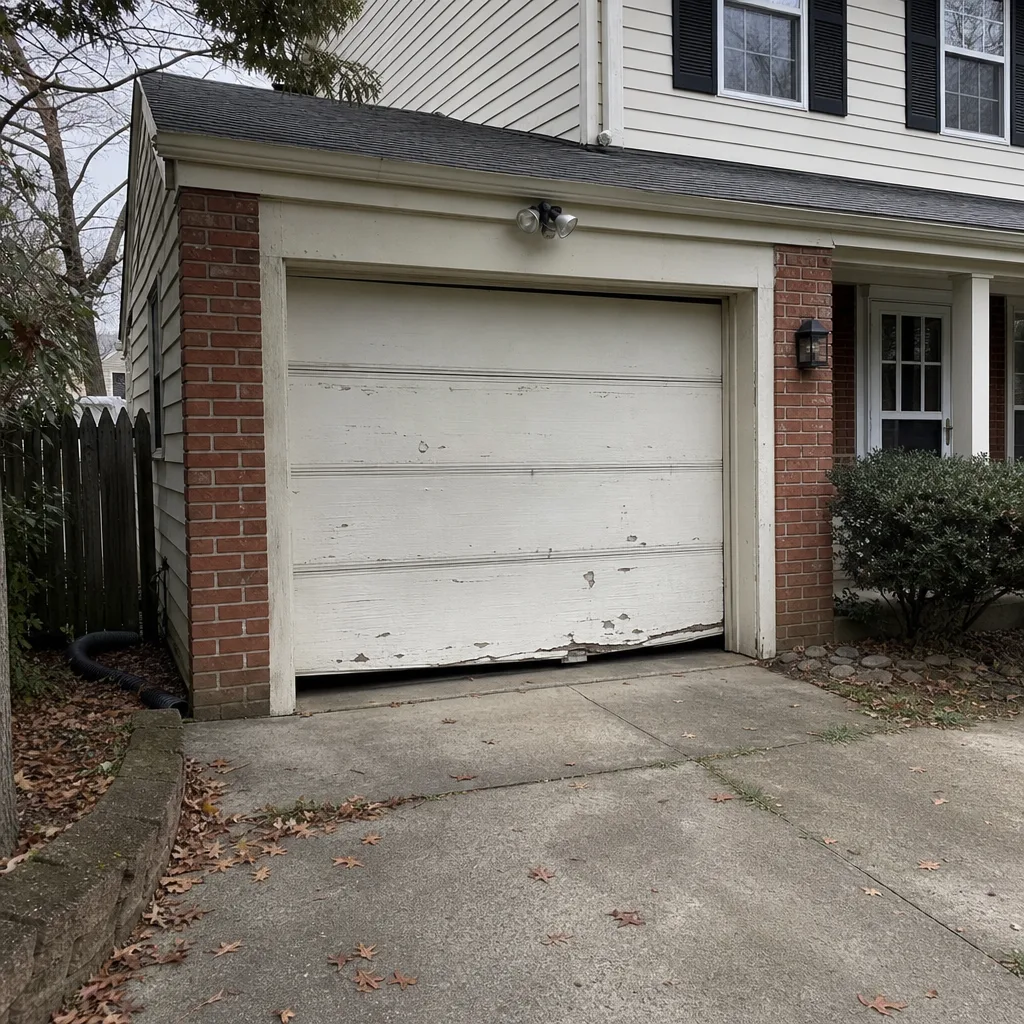 Before
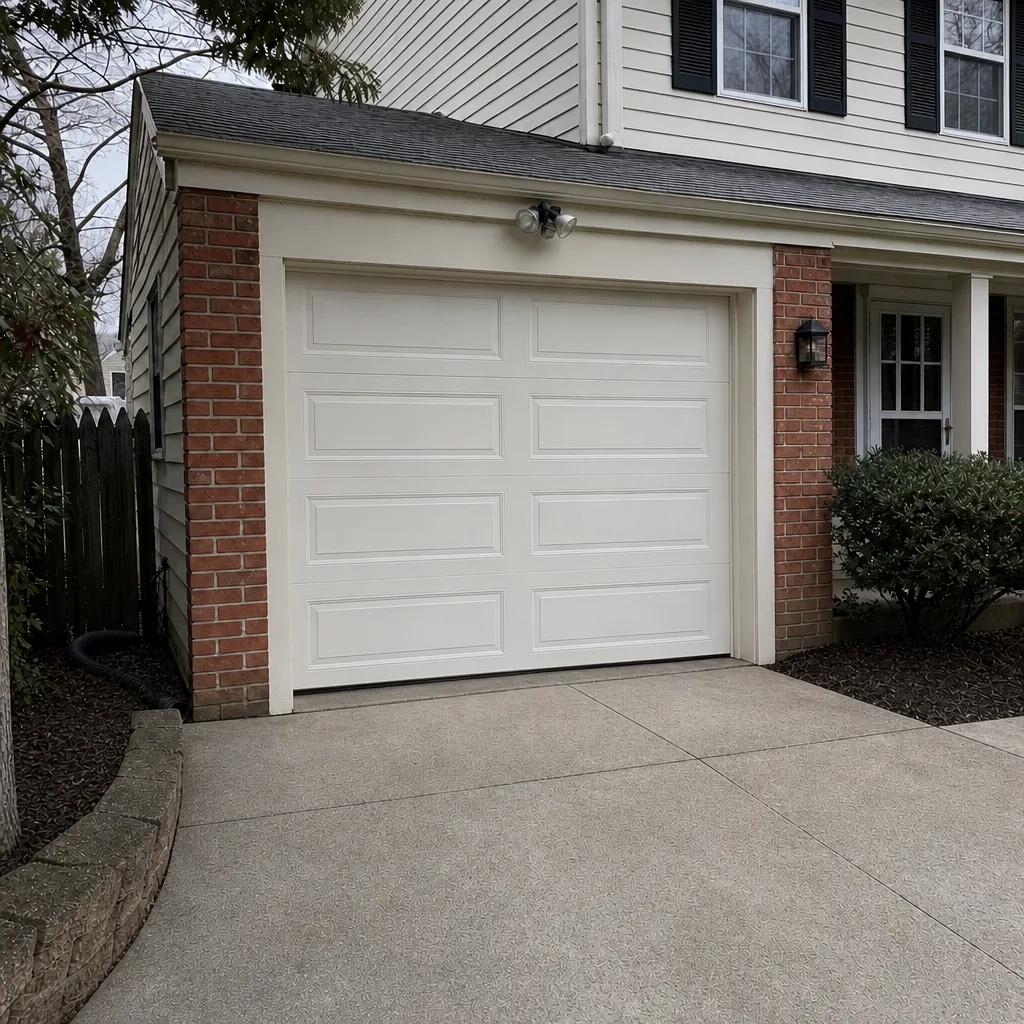 After
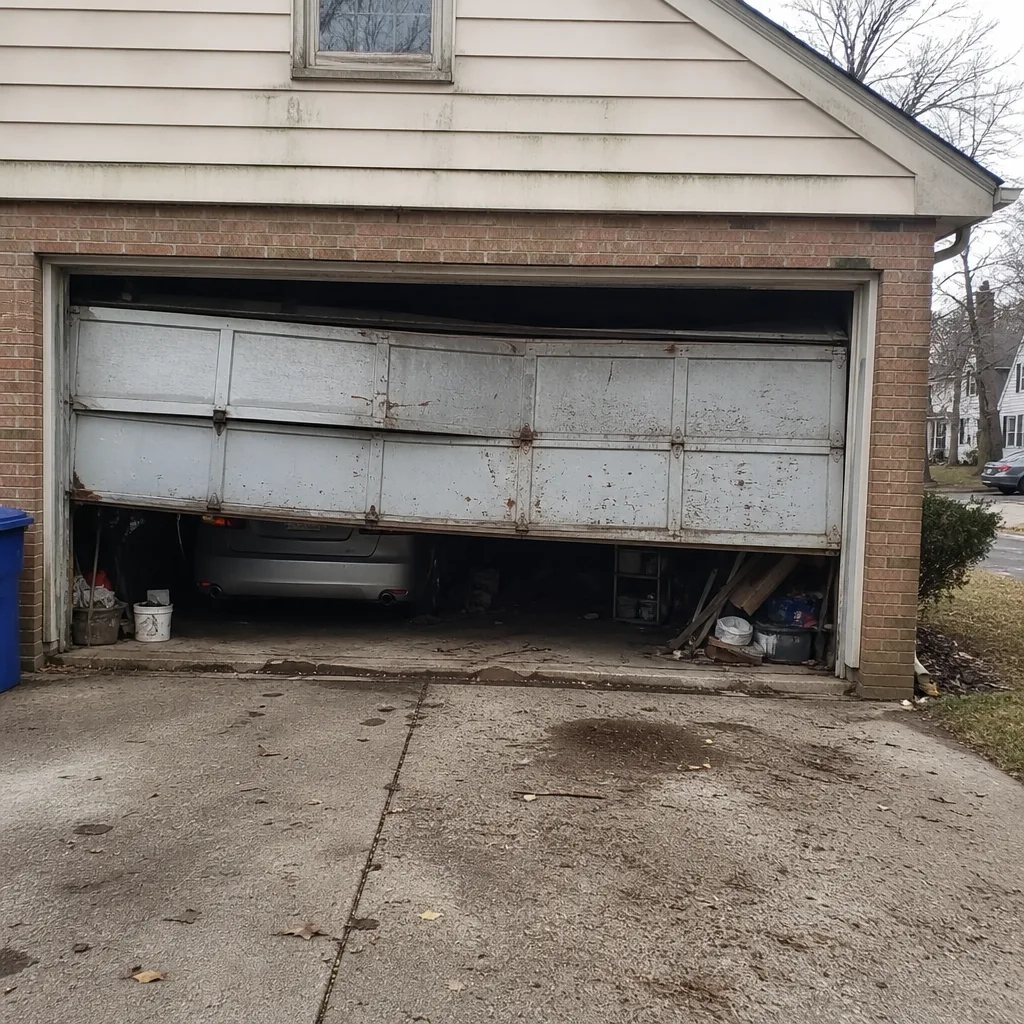 Before
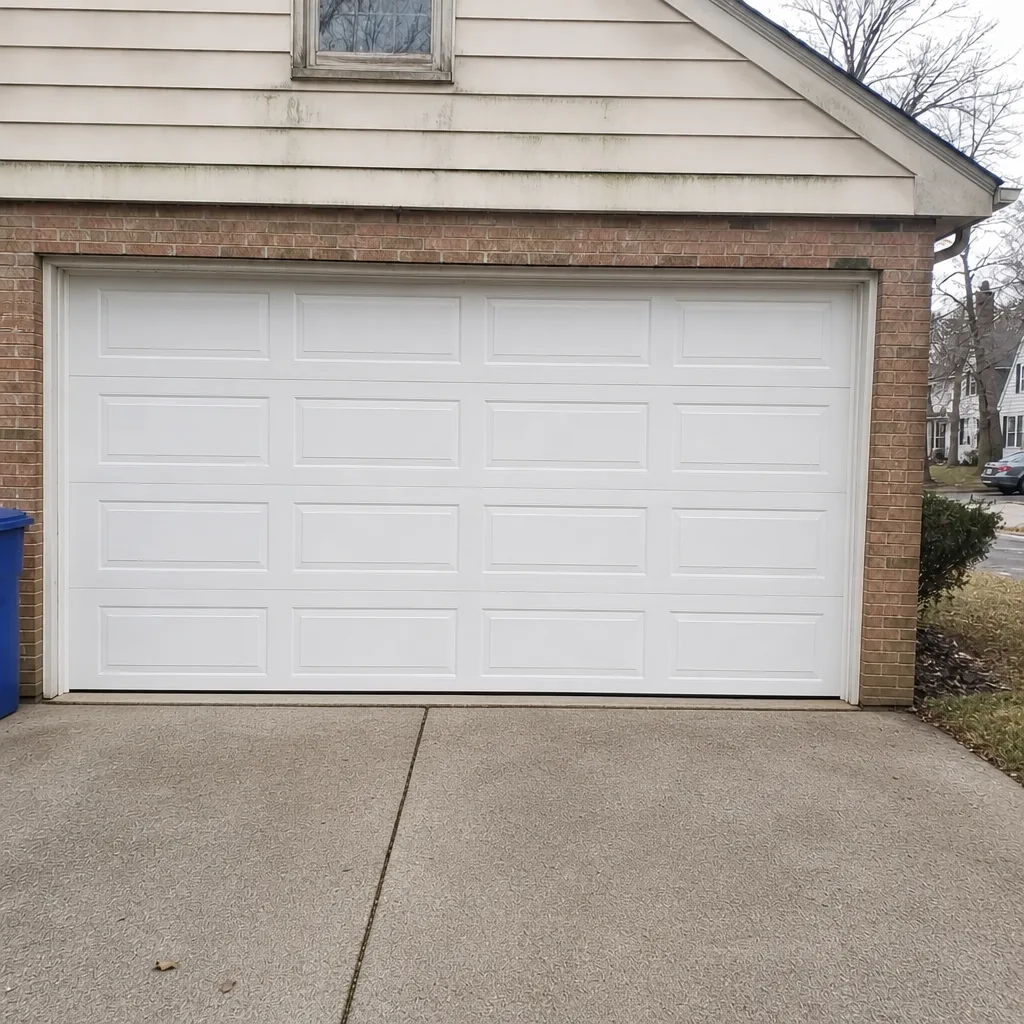 After
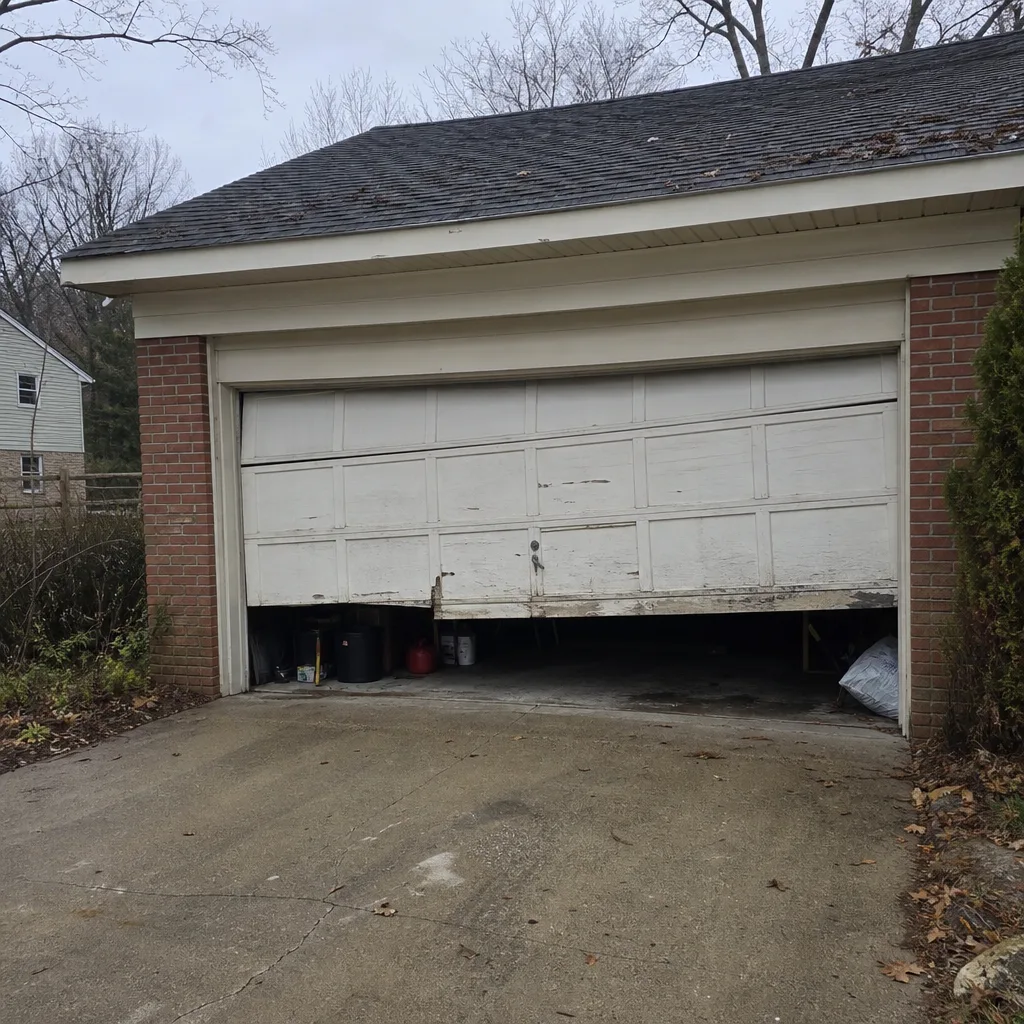 Before
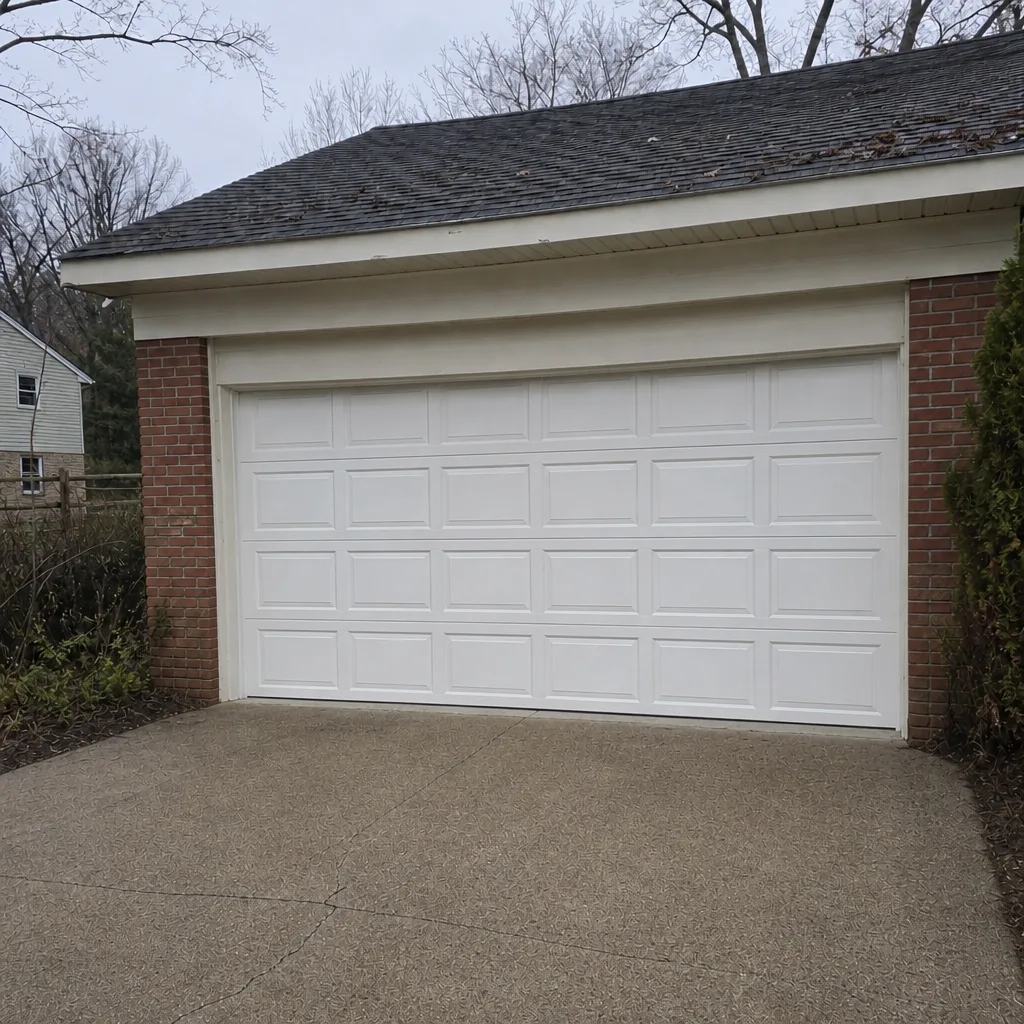 After
When to Call a Professional
Some jobs are safe to handle yourself: replacing a battery in a remote, cleaning the safety sensors, wiping down the tracks, and lubricating rollers and hinges. Everything past that is where we’d recommend a technician, and for good reason. Call a pro when the door won’t balance, when a spring has snapped or is visibly damaged, when a cable is loose or off its drum, when the door is off-track or hanging at an angle, when the opener hums without moving the door, when a new noise has developed that wasn’t there before, or when repair cost is close enough to replacement cost that you need a real assessment rather than a guess. If you’re at the start of a replacement project, call when you’re ready to measure and price, not after you’ve ordered a door in a color your HOA may not approve. Alexandria Garage Door Repair Co offers free estimates in Alexandria, and our technicians have up to 14 years of experience. Call (844) 681-5326 to set one up.
Frequently Asked Questions
Most single repairs in Alexandria fall into a modest range, with spring replacements, opener repairs, and cable or roller work being the common jobs. The written estimate you’re given sets the final price, and that estimate is agreed before any work starts. The range depends on the part, the door’s weight and size, and any additional damage the failure caused. Call (844) 681-5326 for an exact quote, free of charge.
Often, yes. A door that won’t close is a genuine same-day priority in Alexandria, and we’ll be honest with you on the call about what’s possible from your location at that hour. Old Town traffic, the Parkway, and how far into the day the call comes in all affect timing. Call (844) 681-5326 and we’ll tell you what we can do.
No, if the condition is as described. We quote the job before any work starts and the written estimate is what you pay, unless we find something you couldn’t see over the phone (a hidden cable failure, a bent track) and we need to discuss an addition with you first. Nothing is added without your agreement. Call (844) 681-5326 for a free estimate.
The local professional we connect you with is licensed and insured as their state requires, and they carry the training needed for spring, cable, and opener work. Spring work in particular carries real risk, so confirm the credentials on the call before work begins. Call (844) 681-5326 to schedule.
It depends on your jurisdiction and the scope. Alexandria-area parcels split between Alexandria City and Fairfax County, and a same-size replacement is often treated differently from a project that changes the opening. Confirm with your own jurisdiction’s building department before the door is ordered. Call (844) 681-5326 if you’d like help framing the question.
If the door structure is sound and the failure is a spring, cable, roller, or opener, repair is usually the answer. If the door has structural damage, rust-through, or is near the end of its life, replacement often makes more sense. Our Alexandria Garage Door Repair Co team can assess both tracks in a single visit. Call (844) 681-5326 for a free estimate.
The Bottom Line
Alexandria garage doors are shaped by three things a national guide can’t account for: the HOA and architectural review process that governs what your door can look like, the Potomac basin’s humidity and heat that shorten spring life and stress wood sections, and the permit line that runs between Alexandria City and Fairfax County. Get those three right and the rest is straightforward. Diagnose the actual failure before you replace anything. Confirm your jurisdiction and HOA rules before you order. Treat spring and cable work as the specialist jobs they are. And when you’re ready for a real assessment, call a company that works on doors as its only trade. Call (844) 681-5326 for a free estimate.
Written by the team at Alexandria Garage Door Repair Co.